How much does a custom action figure cost? The honest first answer is: there is not enough information yet.
A character may look simple on screen. In production, it becomes a small system of molded parts, joints, accessories, paint operations, printed details, assembly steps and packaging components. Change one part of that system and the quotation may change with it.
That is why a useful estimate starts by separating one-time project work from recurring production work. Development, prototypes, tooling and setup prepare the product for production. Molding, decoration, assembly, packing and agreed inspection repeat against the approved specification and order plan. Freight, duties, taxes or third-party testing may sit outside the manufacturing quotation unless the scope says otherwise.
Before comparing custom action figure prices, give every supplier the same brief: finished size, part breakdown, articulation, accessories, material direction, decoration, packaging, total quantity and quantity per character or colorway. If the assumptions are different, the prices are answering different questions.
This planning approach is for commercial, repeatable production of brand-owned, licensed or otherwise authorized products. It is not a price guide for a one-off portrait figure, personal gift or artist commission. Buyers evaluating custom action figure manufacturing should define the production scope before asking for a final price.
Start With the Cost Structure, Not a Unit Price
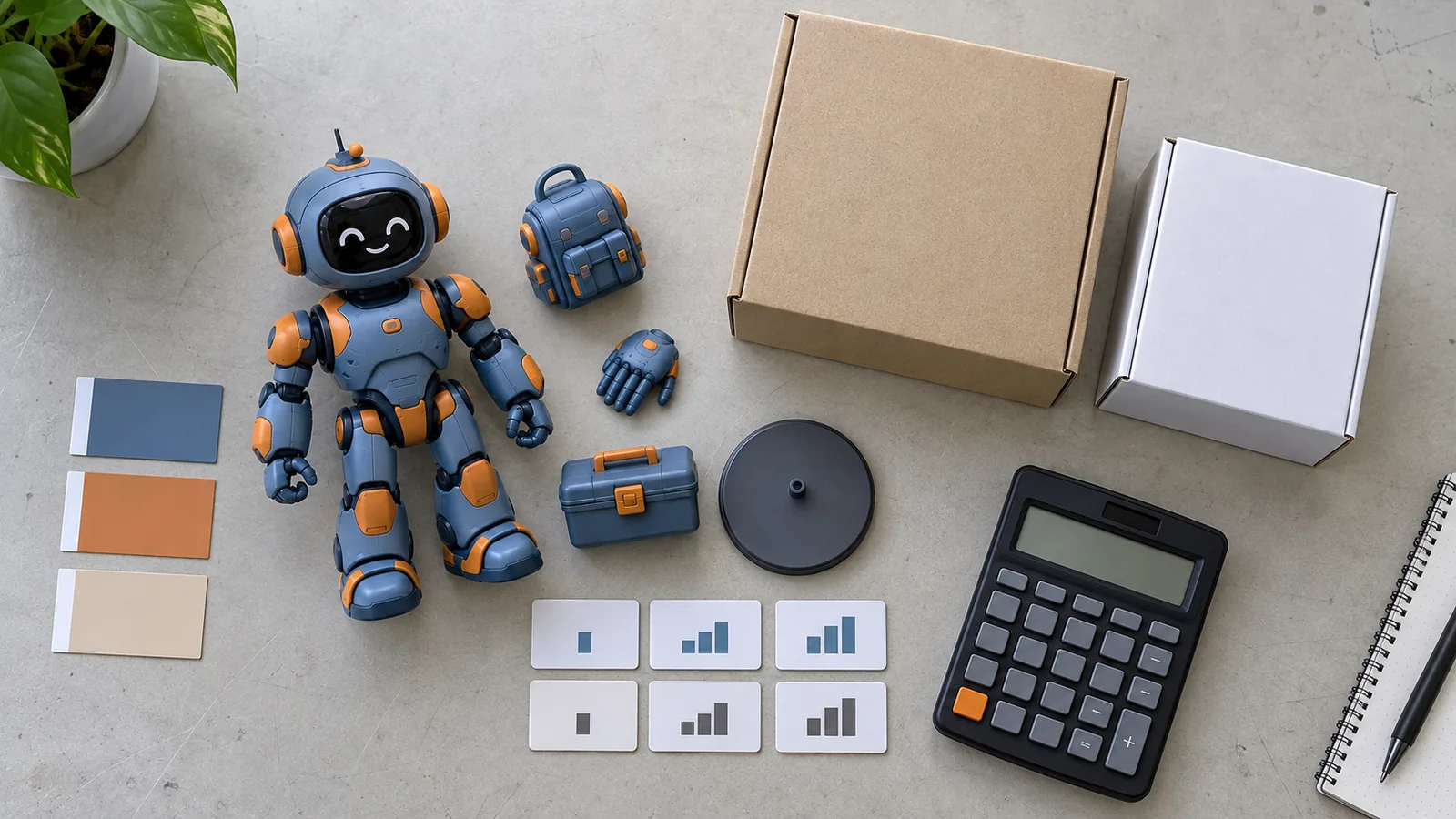
Two quotes can show very different unit prices and still describe different jobs. It is a little like comparing two travel prices when one includes baggage and airport transfers and the other does not. The cheaper number may be real; it may simply cover less.
Use the same cost buckets for every quotation:
| Cost bucket | What it may cover | What you need to confirm |
|---|---|---|
| Development and engineering | Design review, 3D work, part breakdown, production engineering | Which files and outputs are included? |
| Prototypes and approval samples | Appearance, fit, movement, decoration or pre-production checks | What does each sample approve, and how many rounds are included? |
| Tooling and setup | Tools matched to the approved parts and production route | Which parts, accessories and versions are covered? |
| Recurring production | Molding, decoration, assembly and agreed inspection | Which material, quantity and variant assumptions support the unit price? |
| Packaging and pack-out | Packaging development, partner-produced materials, assembly and final pack-out | Which activities and materials are included or separate? |
| Testing and delivery items | Third-party testing, freight, duties or taxes | Included, excluded or still to be confirmed? |
Boxes, instructions, trays, blisters and other packaging materials are partner-produced. FigCrafts coordinates the project, incoming confirmation, assembly and final pack-out.
Keep the scope fixed while comparing suppliers. If you revise articulation, accessories, decoration, packaging or the version split, ask for an updated quote against the same revision. Otherwise, a low unit price can hide work that will return as a later project charge.
Define the Product Before Comparing Costs
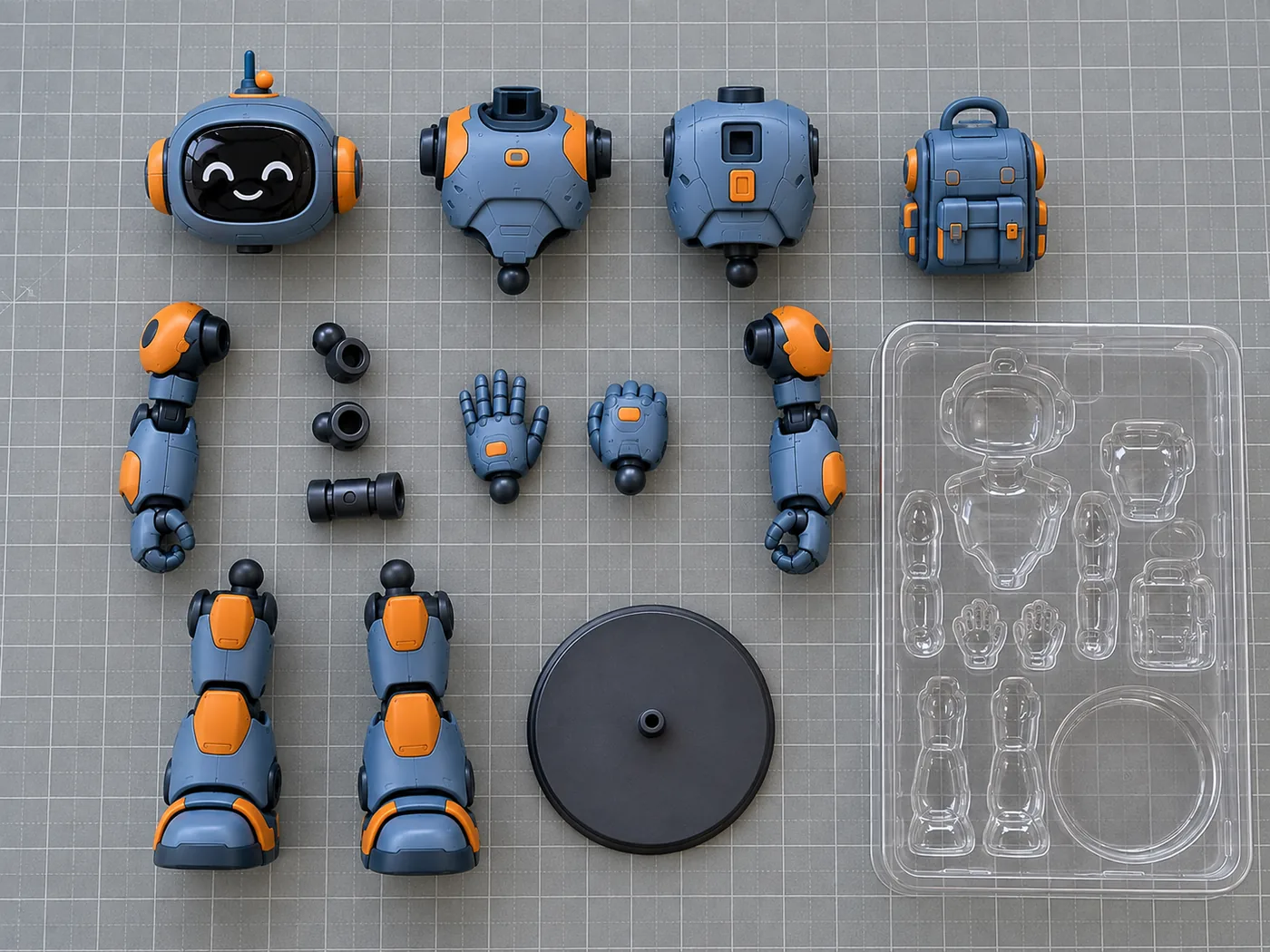
The design must be specific enough for a manufacturer to see how it becomes repeatable parts. A concept image communicates the look. It rarely defines the finished size, material route, part breakdown, joint system, accessory interfaces or assembly sequence.
Imagine a six-inch robot with a removable visor, a shield and two interchangeable hands. To a customer, it is one figure. To production, it may involve several separately molded and decorated parts, multiple connection points, an assembly sequence and a packaging layout that keeps the accessories in place. Those details—not the character image alone—shape the quote.
Start with the decisions that change the production scope:
- Finished size and scale: State the intended height or dimensions rather than relying only on a scale label. Two figures described with the same scale can still have different proportions, accessories or display elements.
- Part count and separation: Identify removable accessories, interchangeable hands or heads, soft parts, clear parts and components that require separate decoration. Each part may introduce its own tooling, molding, finishing, assembly or inspection requirement.
- Material direction: Describe the required feel, rigidity, flexibility, transparency or surface appearance. Final material selection still needs manufacturing review; do not use an unapproved material name as a substitute for the intended performance.
- Articulation and pose requirements: State the movements the product must support. A visual joint count alone does not define range, fit, visible seams or assembly needs.
- Character and colorway plan: List what stays the same and what changes across every version. A new head, accessory, body detail, plastic color, paint mask or printed graphic can alter the quote.
- Packaging direction: Define whether the product uses a box, tray, blister, insert, instructions or other components, and identify the target retail or shipping presentation.
Mark unresolved choices as options. A supplier can then quote a base scope and clearly separated alternatives instead of building hidden assumptions into one number.
Separate Tooling Decisions From Per-Unit Production
Tooling and unit production answer two different questions. Tooling prepares a repeatable production route. Unit production covers the work needed to mold, decorate, assemble, inspect and pack each approved product.
Think of tooling as the production setup behind the recipe. Once that setup is approved, the order quantity changes how its cost is spread across the run, but it does not make the original tooling work disappear.
Action figure tooling cost depends on the actual part strategy, not the character count alone. The manufacturer needs to review part geometry, separation, material, fit, surface requirements and the selected molding route. A figure with more parts does not translate into a simple fixed multiplier: parts may differ in size, complexity, material and tooling arrangement.
Before comparing tooling quotations, confirm:
- which approved parts and versions are covered;
- whether accessories and alternate components are included;
- which prototype, trial or approval outputs are part of the scope;
- what happens if a design change requires tool correction;
- how ownership, storage, maintenance and later use are handled as project terms.
FigCrafts’ tooling and mold-making capabilities cover the production-tooling stage, while injection molding is the recurring molded-part route for suitable projects. Keep those scopes separate in the quotation so later quantity discussions do not obscure the initial tooling requirement.
Plan Articulation, Accessories and Assembly Together
Articulation affects more than the number of visible joints. Each movement may change part separation, mating surfaces, clearances, connector geometry, assembly order and the areas available for decoration. Accessories add their own interfaces and may require separate parts, colors, finishes or packing positions.
Define the required action rather than asking for the maximum possible joint count. A hero that only needs to grip a sword and hold a shelf pose may not need the same joint plan as a figure designed for repeated play and wide posing.
Say what the product must do. Should it hold a heavy accessory? Sit down? Keep an interchangeable hand secure? The manufacturer can then review how that function affects appearance, parts and assembly.
Separate requirements into three groups:
- Required: Movements, accessories and interfaces essential to the product concept.
- Optional: Features that can be quoted as alternatives if they materially change tooling or assembly.
- Pending review: Ideas that need engineering or sample evaluation before they can be confirmed.
This structure prevents optional features from being treated as fixed scope. It also gives procurement a clear basis for accepting or rejecting a cost change after engineering review. Detailed joint architecture belongs in the product-engineering decision; the budget plan needs only the approved functional requirement and its effect on parts, tooling, assembly and inspection.
Decoration Is a Specification, Not Just a Color Count
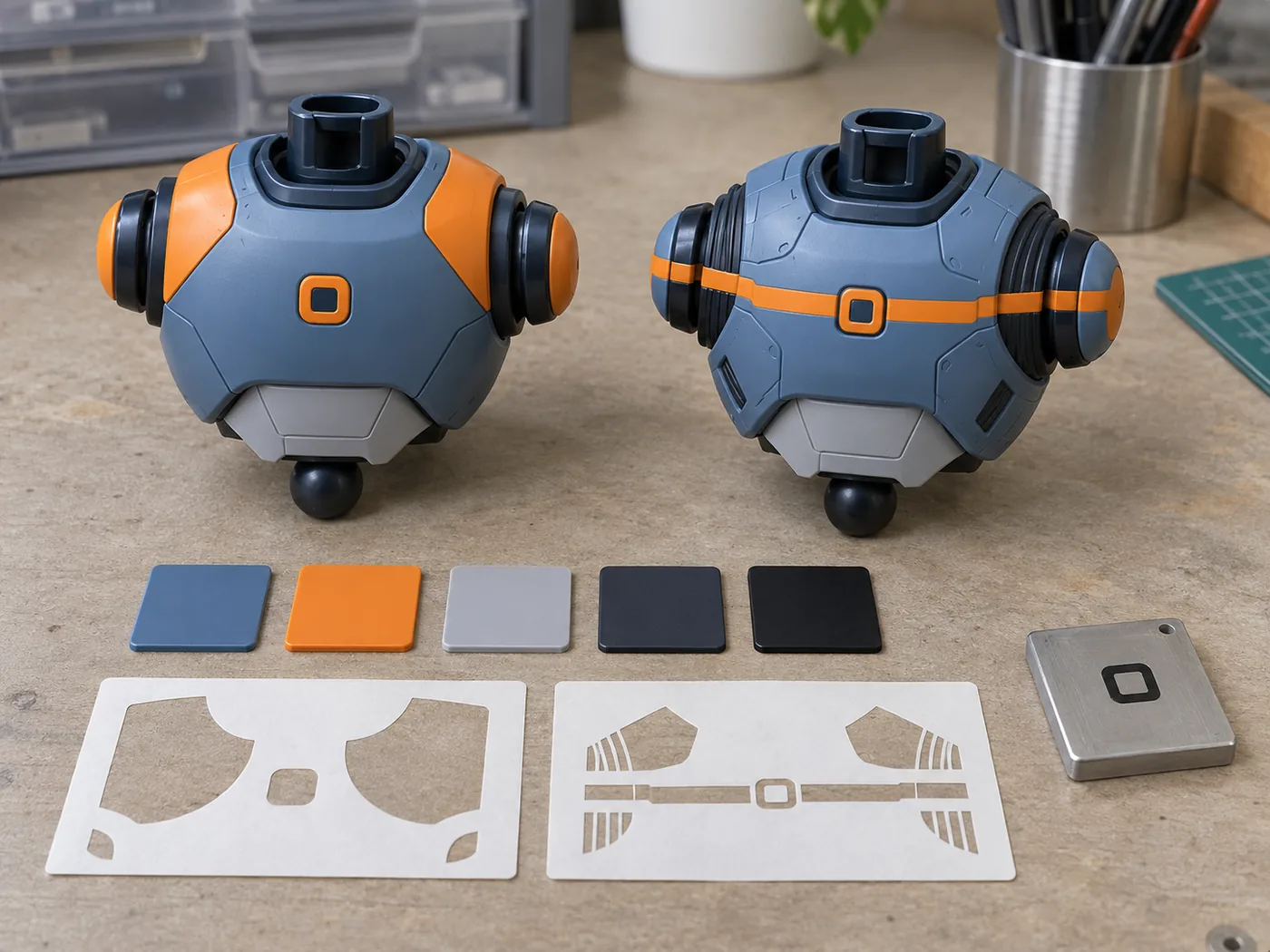
Two figures can both use five colors and still require very different decoration work. A red stripe across a smooth chest is not the same job as a red stripe wrapping around ribbed armor, crossing a joint and meeting a printed emblem.
Location matters. Shape matters. Alignment matters. The approval standard matters too.
Prepare decoration references that identify:
- plastic colors and painted areas;
- front, back, side and hidden views;
- printed graphics, symbols or facial details;
- gloss, matte, metallic, transparent or other surface directions;
- variant-specific colors and graphics;
- the physical or visual reference used for approval.
Action figure paint cost cannot be judged from a front rendering alone. A design may place color boundaries around complex geometry, require multiple alignment-sensitive graphics or use different treatments across versions. Those conditions affect how the supplier evaluates fixtures, masking, printing, hand work and approval samples.
FigCrafts supports painting and pad printing within the approved manufacturing scope. Buyers should provide a complete decoration specification and confirm what the approved sample will control. Do not leave rear views, accessory graphics or surface distinctions to interpretation.
MOQ Means More Than One Number
An action figure MOQ needs context. The total order quantity, the quantity per character or colorway, the tooling strategy, the materials, the decoration plan and the packaging split all affect production planning.
For suitable injection-production projects, the approved working statement is: Typical injection production MOQ is 500–1,000 units, depending on tooling, material, part count, variants, finish and packaging. This is a conditional range, not a promise for every project and not a substitute for quotation review.
For bulk custom action figures with multiple versions, provide both levels of quantity:
- total quantity across the product line;
- quantity for each character, colorway, accessory set or packaging version.
Illustrative quantity comparison — not a quotation or MOQ approval
| Order plan | Characters | Colorways per character | Total SKUs | Units per SKU | Total units |
|---|---|---|---|---|---|
| Plan A | 3 | 1 | 3 | 1,000 | 3,000 |
| Plan B | 3 | 2 | 6 | 500 | 3,000 |
Both plans total 3,000 units. Plan B, however, doubles the number of SKUs. That may mean more decoration references, labels, packaging identifiers and version-level production control. The total quantity alone does not show that difference.
An order of several versions is not necessarily evaluated as one undivided run. Different plastic colors, paint masks, printed graphics, accessories, labels or packaging components may require separate preparation and production control. A balanced total can still contain a very small version that needs separate review.
Prototype and low-volume routes follow different production economics from injection production. Keep them separate when comparing quotations. A prototype price does not establish a molded production unit price, and a production MOQ does not define how many samples are needed for approval.
Use Shared Parts Only When the Specification Really Matches
Parts reuse can reduce duplicated project work only when the proposed parts are genuinely compatible. Similar-looking components may still differ in geometry, material, surface texture, connection details, decoration or fit requirements.
Create a small version matrix before asking the factory to assume parts can be shared:
| Label | What it means | Buyer action |
|---|---|---|
| Unique | The part differs by design, function, material or interface | Quote it within the relevant version |
| Potentially shared | The concept looks compatible, but production compatibility is unconfirmed | Ask engineering to review geometry, material, surface and fit |
| Common by requirement | The same approved specification must be used across the listed versions | Control it under one approved revision |
Apply the same discipline to packaging. A shared box size does not automatically mean every insert, label, printed panel or packed arrangement is identical. Record each difference before requesting a combined quote.
Do not commit projected savings to the business case until engineering confirms the shared-part strategy. The quotation should show which tools, setups and production steps actually serve more than one version.
Control Changes Before They Reach Tooling and Packaging
A cost plan is most stable when each approval closes a defined set of decisions. Approve proportion, part separation, articulation intent and visible seams before tooling. Approve fit and function before production release. Approve decoration references and packaging artwork against a controlled revision.
Late changes can reopen work that already looked finished:
| Change | Earlier decision to lock | What may reopen later |
|---|---|---|
| Sculpt or part split | Proportion, geometry and visible seams | 3D work, samples or tooling review |
| Joint or connector | Required movement, mating parts and fit | Parts, tooling, assembly or another trial |
| Accessory | Size, grip/interface and packed position | Parts, decoration and packaging space |
| Color or graphic | Full decoration views and approval reference | Artwork, masks, printing setup or approval samples |
| Packaging | Structure, insert, artwork and packed arrangement | Partner-produced materials and final pack-out planning |
Assign one approval owner on the buyer side and use revision numbers for design files, part lists, decoration references and packaging artwork. Record what was approved, the date and any remaining conditions. FigCrafts’ overview of how action figures are manufactured provides the broader process context; the budget decision is to prevent an outdated revision from advancing into the next stage.
The exact schedule impact of a change depends on the project stage and the work that must be repeated. Request a revised quotation and schedule review when an approved input changes rather than assuming the original plan still applies.
Compare Quotes on the Same Scope
Custom action figure prices become comparable only when suppliers are responding to the same revision, quantity plan and delivery boundary. Normalize each quotation before deciding which commercial offer fits the project.
Check the same lines in every quote:
| Compare | Ask the supplier |
|---|---|
| Development | Which design review, modeling, engineering or part breakdown is included? |
| Samples | Which prototypes, trials or decorated samples will be supplied, and what does each one approve? |
| Tooling | Which parts and accessories are covered? What ownership, storage, maintenance or change terms apply? |
| Production | Which materials, quantities, version splits, molding, decoration and assembly operations support the unit price? |
| Packaging | Are development, partner-produced materials, incoming confirmation, assembly and final pack-out clearly separated? |
| Inspection and testing | What inspection scope is agreed? Is third-party testing included or excluded? |
| Commercial exclusions | Are freight, duties, taxes and other landed-cost items identified? |
| Changes | Which assumptions would trigger requotation, another sample or revised approval? |
Match the inspection line to the supplier’s quality-control scope and your product requirements.
Do not fill a blank with the most favorable assumption. Ask the supplier to confirm it in the quotation. A commercially useful quote states what will be delivered, what the buyer must approve and what remains outside the quoted scope.
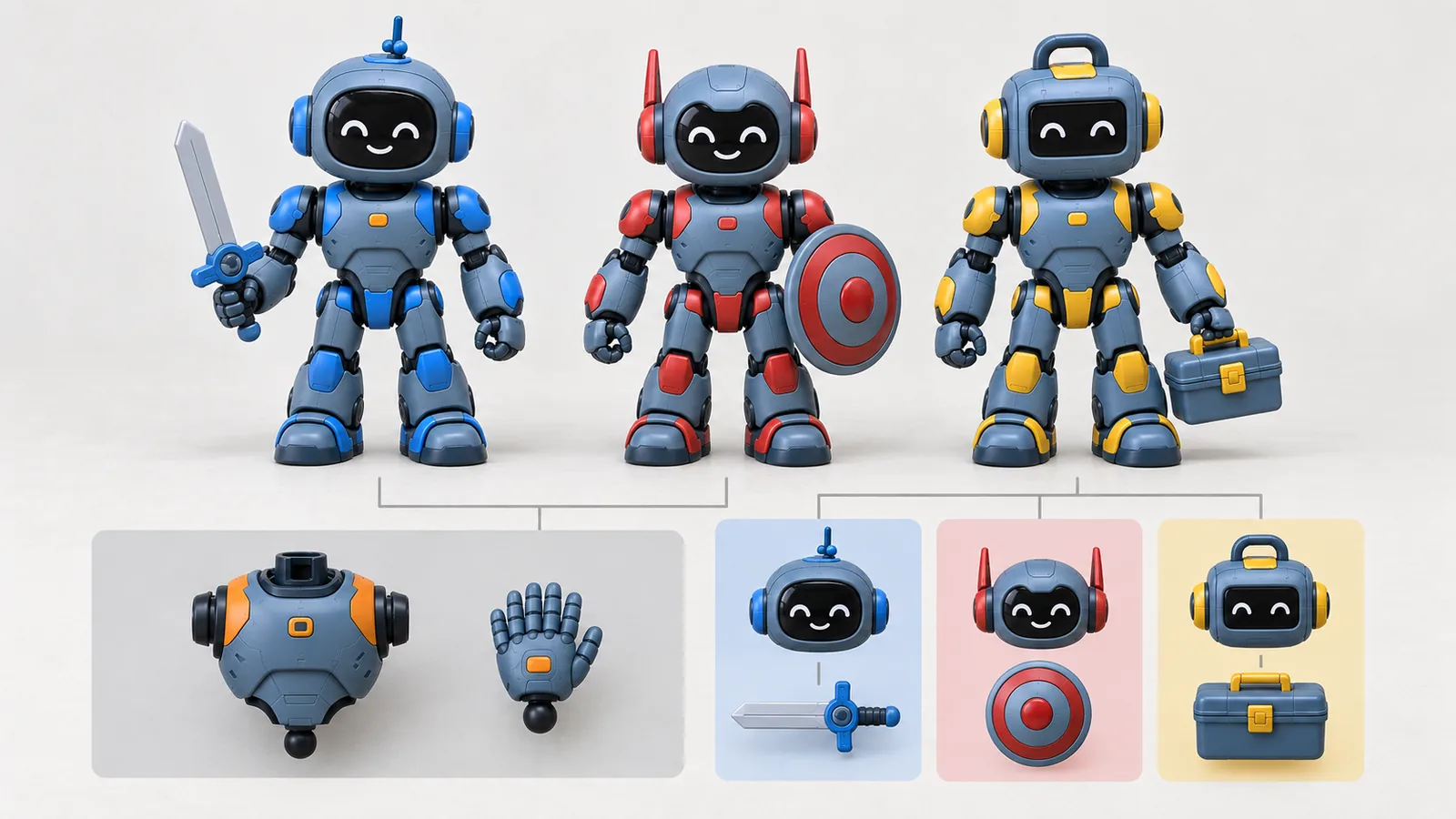
Illustrative Buyer Scenario
This is an illustrative planning scenario, not a FigCrafts client project or a statement of measured savings.
A brand is planning three characters for one action figure line. The concepts use a similar torso proportion and the same basic hand connection. Each character still has a different head, costume detail, accessory set and color scheme.
The buyer turns the concept into a simple planning matrix:
| Item | Character A | Character B | Character C | Planning status |
|---|---|---|---|---|
| Torso | Same concept | Same concept | Same concept | Potentially shared; engineering review required |
| Head | Unique | Unique | Unique | Separate parts |
| Hand connection | Same concept | Same concept | Same concept | Potentially shared; fit review required |
| Accessories | Sword | Shield | Tool set | Separate parts and packed positions |
| Decoration | Blue | Red | Yellow | Separate decoration references |
| Packaging | Common outer size proposed | Common outer size proposed | Common outer size proposed | Inserts and identifiers still need confirmation |
The manufacturer can now review shared parts as an engineering question instead of assuming that visual similarity guarantees reuse. Procurement can also see which quotation lines apply across the range and which belong to one version. No saving is counted until the compatible parts and production steps are confirmed.
What to Include in a Production Review Request
Send enough information for the manufacturer to identify the production route, open decisions and quotation boundaries:
- company or brand and the authorized product/IP status;
- concept art, drawings, 3D files or available reference samples;
- finished size and scale intent;
- total quantity and quantity by character, colorway or SKU;
- material or product-feel direction;
- required articulation, removable parts and accessories;
- decoration views, graphics and finish references;
- packaging format and components;
- target market and known inspection or testing requirements;
- target schedule, with any fixed launch or approval dates clearly identified;
- a list of approved, optional and unresolved decisions.
Unknown details do not need to be hidden. Mark them clearly so the supplier can separate confirmed scope from assumptions and options. FigCrafts’ current manufacturing capabilities can support the route review, but feasibility and quotation still depend on the submitted project information.
Request a Production Review
Share your design files, finished size, expected quantity, character or colorway split, articulation, accessories, finish requirements, packaging direction and target market. Note which items are approved and which still need engineering review.
FigCrafts can review the available information against the proposed manufacturing route and identify the inputs needed for a project-specific quotation. We work with brand-owned, licensed or otherwise authorized designs, and proof of rights may be requested before production.