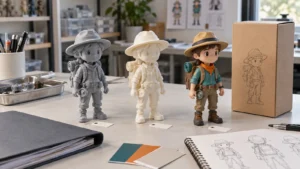
The sample arrives and, at first glance, it looks ready. The helmet sits straight. The sword fits the hand. The colors are close to the artwork. So, can production start?
Maybe—but a good-looking sample is not always a production-ready sample.
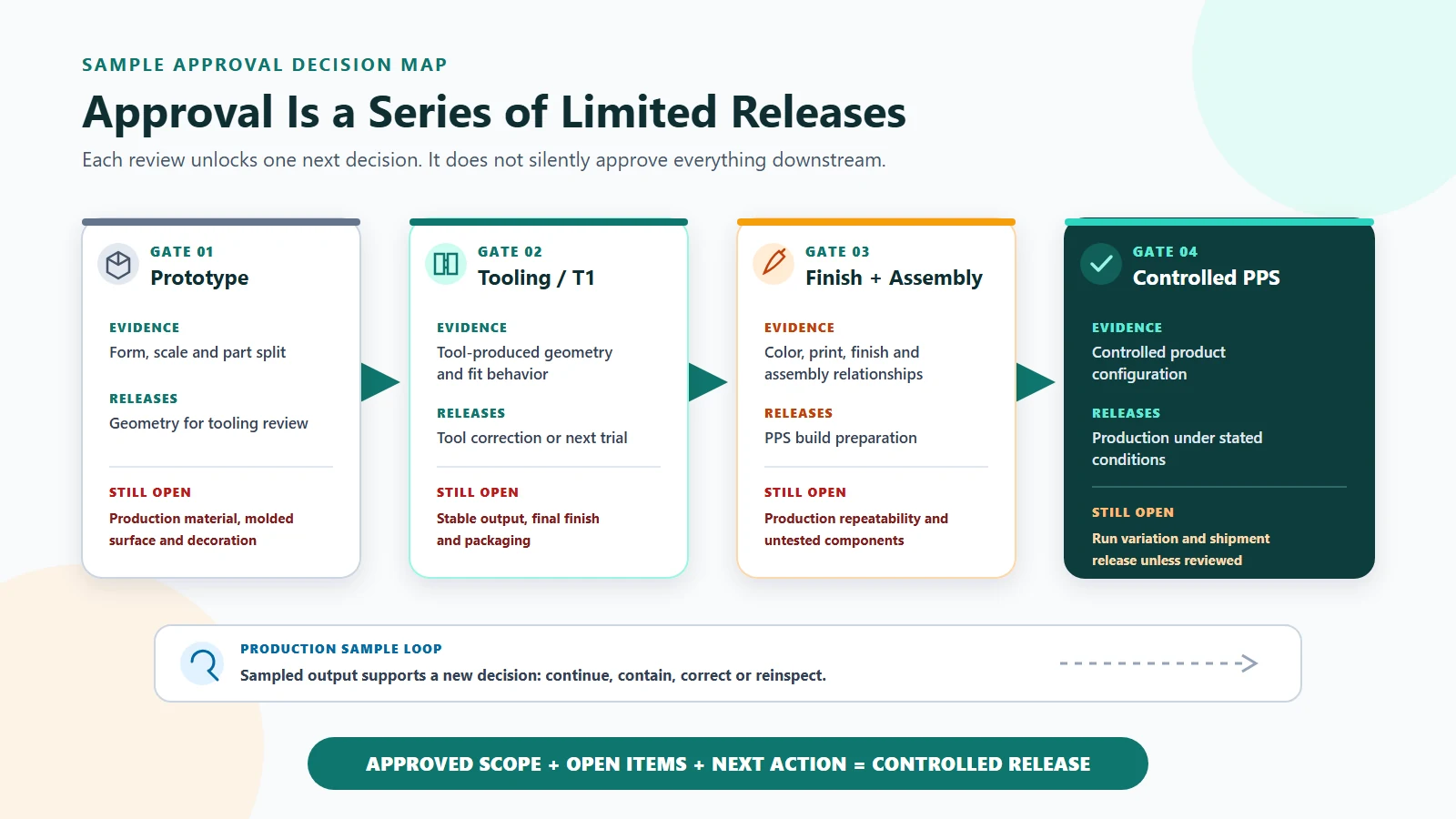
An early prototype may confirm the pose, proportions and part split. It may not use the intended resin, tooling or decoration process. A tooling sample can reveal how molded parts behave, while color, printing and packaging are still open. A pre-production sample may bring those pieces together, but only when the buyer and supplier agree on what “production representative” actually includes.
Before you write “approved,” name the decision. Are you accepting the sculpt direction? Releasing a mold correction? Confirming the paint layout? Or authorizing production against a controlled reference?
Then make the boundaries visible: which sample was reviewed, which file revision it represents, what has been accepted, and what remains open.
Think of approval as a green light at one junction—not a green light for the entire road. The sample name can change from one supplier to another. The decision record is what keeps design, tooling, production and quality teams moving in the same direction.
Start With the Decision, Not the Sample Name
“Prototype,” “T1,” “PPS,” “approval sample” and “golden sample” can sound precise. In practice, their meaning may change between suppliers, product types and projects.
One team may call a painted prototype a pre-production sample because it represents the intended appearance. Another team may reserve that name for a unit made with the intended tooling, material, decoration, assembly and packaging. Neither label tells you enough on its own.
Ask three questions before the sample is made:
- What must this sample represent? Define the intended material, tool or source, process, finish, assembly and packaging status.
- What must the review decide? Name the requirements that can be accepted at this stage and the points that must remain open.
- What work may begin after approval? State whether the decision releases a design update, tooling action, decoration trial, pre-production build or production.
The source of the sample matters too. Was it printed in a sample room? Produced during a tool trial? Assembled by hand with temporary parts? Taken from a production run? Two samples can look similar on a desk while representing very different manufacturing evidence.
Use a short expectation statement before each round:
Purpose: confirm proportion, part split and accessory position.
Represented: current 3D geometry and physical scale.
Not represented: production resin, molded texture, paint process or packaging.
Decision after review: revise or release the selected geometry for tooling review.
Now everyone knows what “good” means before comments arrive. The approval can close the intended question without quietly closing five others.
Prototype, Tooling Sample and Pre-Production Sample Compared
Choose the stage according to the question you need answered. One sample may answer several questions. It cannot prove a material, finish or process that it does not represent.
| Sample stage | Main question | Production representativeness | Reasonable approvals | Still unverified | Typical next decision |
|---|---|---|---|---|---|
| Appearance or engineering prototype | Does the idea work in three dimensions? | Low to partial | Shape, scale, part split, basic fit or movement concept | Molded behavior, final material, texture, decoration and packaging | Revise the design or release selected geometry for tooling review |
| Tooling / T1 sample | What did the first controlled mold trial reveal? | High for molded geometry; incomplete elsewhere | Tool-related observations, selected dimensions, fit direction and correction priorities | Stable run output, final color, decoration, complete assembly and batch consistency | Correct the tool, run another trial or release accepted parts for the next check |
| Decorated or assembly sample | Do the chosen paint, print, finish and assembly methods look and work as intended? | Limited to the demonstrated processes | Color direction, print position, masking lines, finish relationships and assembly sequence | Production repeatability, untouched components and final packaging | Revise the finish instructions or prepare the pre-production sample |
| Pre-production sample / approved production reference | Does the combined product match the current controlled requirements? | Intended to be high; confirm every included process | The represented product configuration, decoration, accessories, labels and packaging | Variation across the production run and any incomplete test or inspection | Release production within stated conditions or request targeted reapproval |
| Production sample | Does actual output still match the approved reference? | High for the sampled units | Recorded comparison with the reference and disposition of observed deviations | Every other unit or carton not covered by the agreed inspection scope | Continue, contain, correct, reinspect or decide shipment disposition |
One Figure, Five Different Questions
Picture an action figure holding a sword.
At the prototype stage, you might ask: Does the pose read correctly? Can the hand hold the sword without looking oversized? Does the shoulder clear the armor when the arm moves? Those are useful design answers. They do not approve production plastic or molded surface texture.
The prototype and sample-making route should match the question the sample needs to answer.
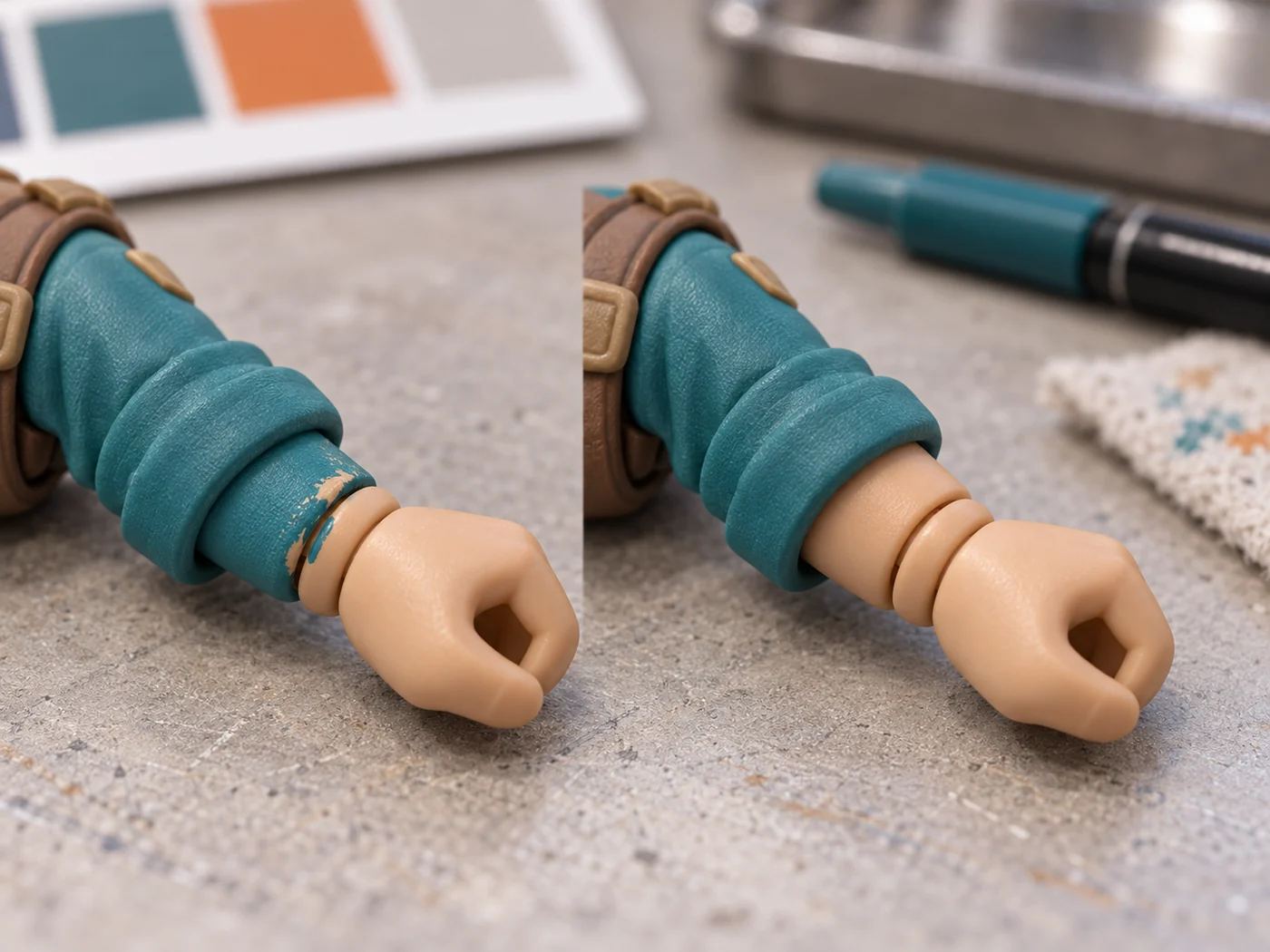
At T1, the conversation changes. Now you can review what came from the tool: the wrist socket, the hand fit, the visible parting line and the relationship between molded parts.
“T1 approved” is still too vague. A clearer response is: “Hand and wrist fit accepted against revision C. Correct the visible line on the forearm, then submit the next trial.”
Details about how the tool is developed belong with tooling and mold making. The approval record only needs to state the decision and the next permitted action.
The decorated sample answers another set of questions. Is the glove color correct? Does a paint boundary cross the wrist joint? Is the emblem aligned when the torso is assembled?
A hand-prepared print may look right once and still need a production-process check. Finish-specific controls belong with painting and pad printing. This approval records exactly which visible result was accepted.
The pre-production sample brings the pieces together. The sword, figure, accessories, labels and packaging should be checked against the current controlled files. If the sword color is temporary, say so. If the package insert is still awaiting approval, keep it open.
The production sample comes after the release. It tells you whether the sampled output still matches the approved reference. It does not prove that every unit in the batch is conforming.
What Each Approval Can Release
A reply of “looks good” may be friendly, but it leaves the next action open to interpretation. Replace it with a disposition that tells the team what to do.
| Disposition | Use it when | What should happen next |
|---|---|---|
| Approved for the named next step | Every requirement needed for that release has been accepted | Proceed only with the work named in the approval |
| Approved with recorded open items | The remaining items do not undermine the released decision | Assign each open item an owner, next check and closure point |
| Revise and resubmit | The sample answers the right question but misses one or more agreed requirements | Correct the identified points and submit the required evidence again |
| Hold | The sample, files or evidence cannot support the decision | Stop the affected work until the missing reference or representative sample is available |
“Approved with open items” deserves extra care. It should not become a polite way to move every unresolved problem downstream.
Imagine that a figure body is accepted for a tooling correction, but the face artwork is still being revised. Tool-related work on the body may continue if the artwork change cannot affect the tooling decision. Decoration approval should remain open.
Now change one detail: the new face design includes sculpted markings instead of printed markings. That can affect geometry. The tooling decision may no longer be independent, so a hold or targeted reapproval may be more appropriate.
A release statement can stay short:
Disposition: approved for the next tooling trial against model revision C.
Open item: face print artwork revision 04 requires decoration approval.
Exclusion: production and packaging are not released.
This is operational project control, not universal contract language. Commercial terms and legal acceptance remain project-specific.
Record What Was Reviewed
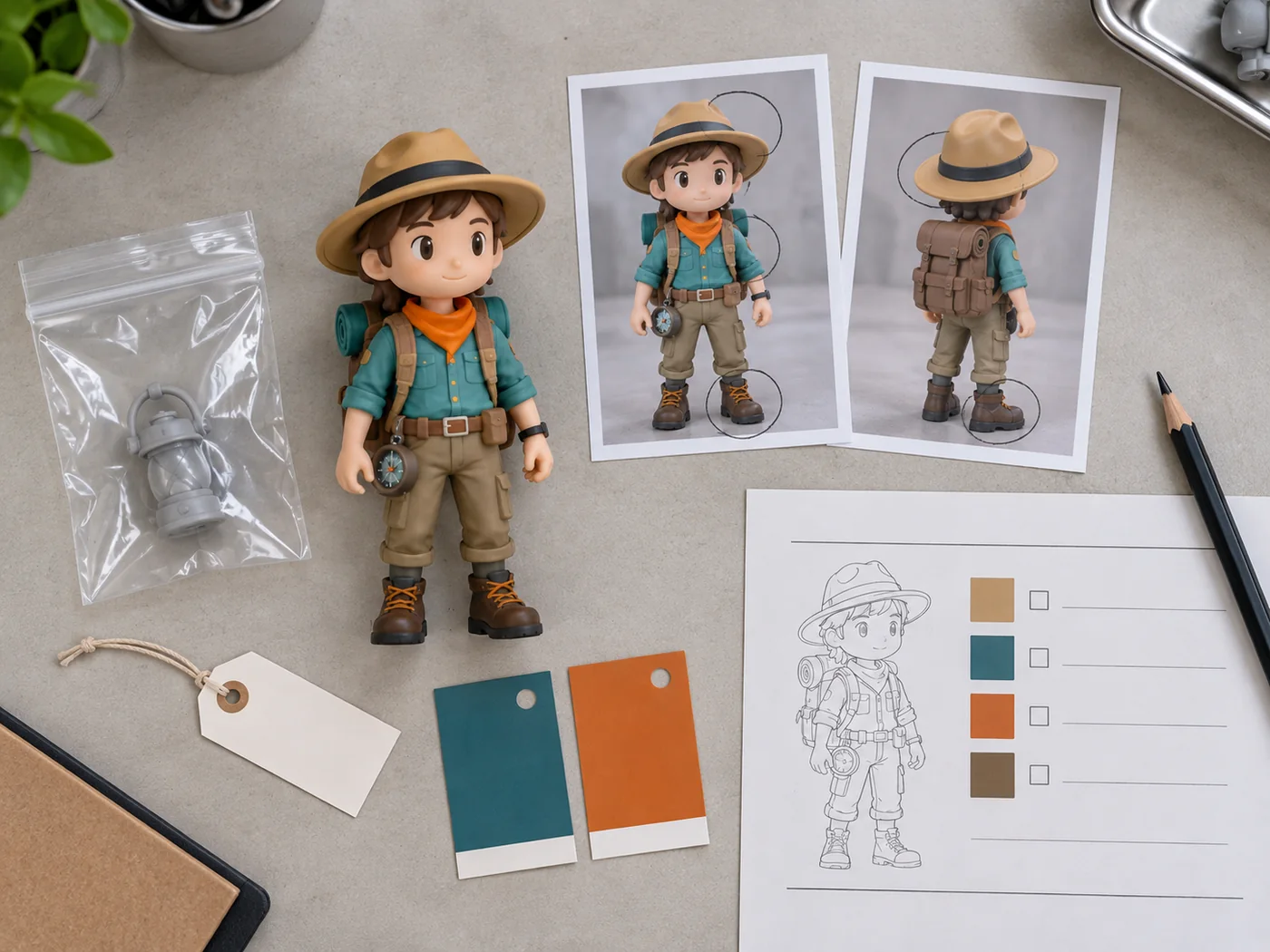
A physical sample can outlive the email that approved it. Months later, someone may remember that “the blue one” was accepted but not know whether it used artwork revision 05 or 06.
Keep the sample and its record connected.
| Record field | Why it matters | Simple example |
|---|---|---|
| Project, product or SKU | Prevents similar products from being mixed | Character A — standard colorway |
| Sample ID and stage | Identifies the exact unit under review | PPS-A-03 |
| Date and sample origin | Shows when and how the unit was made | Decorated tool-trial parts, manually assembled |
| Controlled file revisions | Connects the sample to the correct definition | Model Rev C; artwork Rev 06; part list Rev 04 |
| Represented processes | Defines what the sample can prove | Molded parts and decoration represented; final packaging not represented |
| Reviewed requirements | Records the actual scope | Overall appearance, accessory fit and print position |
| Accepted deviations | Prevents a known exception from being rediscovered | Temporary unprinted base accepted for this round only |
| Open actions | Keeps unresolved work visible | Update face print position and resubmit a marked photo |
| Disposition and next release | Converts feedback into action | Approved for packaged PPS build after artwork correction |
| Approver and approval date | Shows who made the decision and when | Buyer approval owner; date recorded |
| Retained reference location | Keeps later comparisons on the same version | Buyer reference and factory reference identified by sample ID |
The exact format can be a controlled spreadsheet, project system, PDF or approval form. The format matters less than the link between the physical sample, the current files and the recorded decision.
Photographs are useful evidence when they show the sample ID and the reviewed area clearly. They do not automatically replace physical review. Color, feel, fit, movement and measurable characteristics may need other evidence.
Mark superseded files and samples clearly. A sample that was accepted two rounds ago should not wander back into production after its replacement has been approved.
Give Revision Feedback That Can Be Closed
“The face still looks wrong” communicates a reaction. It does not tell the designer or factory what to change.
Turn feedback into a closed-loop instruction:
- Identify the sample and controlled revision.
- Mark the exact area on a numbered photo or view.
- Describe what you observed.
- Point to the intended reference.
- State the required result.
- Name the evidence needed for closure.
From a Vague Comment to an Actionable One
Too vague
The face still looks wrong. Please improve it.
Ready for action
Sample PPS-A-03, front view, item 2: the left eyebrow sits lower than artwork revision 06 and changes the expression. Align the eyebrow position with the marked artwork. Return one front photo and one three-quarter photo for decoration recheck. No change is requested to the sculpt.
The improved version separates decoration from geometry. It also tells the team what evidence can close the comment.
Consolidate comments before sending them. If the brand owner, licensor, designer and procurement team send four independent markups, the factory may receive duplicated requests or conflicting directions.
Use one approval owner to issue the controlled response. Keep discussion notes separate from the final disposition. Production should not have to decide which comment was merely an idea and which one changed the approved requirement.
Decide When Reapproval Is Required
A previous approval remains useful only while the controlled product stays within its scope. When something changes, ask which accepted characteristics could be affected.
| What changed? | Recheck the affected evidence | What may remain closed? |
|---|---|---|
| Geometry, part split or connection | Shape, interfaces, movement, assembly and any linked packaging fit | Unaffected artwork or finishes may remain closed |
| Material or component | Appearance, fit, feel, function and applicable requirements influenced by that change | Unrelated geometry may remain closed if the change cannot affect it |
| Tool, cavity or production process | Tool-produced geometry, surface, fit and process-specific results | Unaffected design intent can remain the controlled target |
| Color, artwork, print or finish | Color reference, placement, masking, surface appearance and interaction with assembly | Accepted geometry can remain closed when it is not affected |
| Assembly method, accessory or part list | Interfaces, sequence, completeness and package contents | Unchanged components may keep their prior approval |
| Packaging structure, artwork or orientation | Product fit, protection, labels, inserts and pack-out reference | Product geometry and decoration may remain closed if untouched |
| Accepted deviation or inspection requirement | The characteristic covered by the deviation and any downstream control | Other approved requirements can remain closed |
Reapproval does not always mean repeating the whole project. Match the new review to the characteristics placed at risk.
A head sculpt change may require a new geometry and decoration check. It does not necessarily reopen an unchanged base accessory. A new accessory with a different connection may require fit and packaging rechecks even if its color stays the same.
The approval record should explain that boundary. “Reapprove Head B connection and tray fit; all other PPS items remain unchanged” is clearer than sending the entire product back through an undefined review.
Apply the Same Framework to Different Products
The decision system stays consistent across character products. The specialist checks do not.
| Product context | Shared approval decision | Specialist checks handled elsewhere |
|---|---|---|
| Action figure | Confirm whether the stage releases structure, tooling, decoration or the production reference | Joint fit, pose stability, paint rub and accessory retention |
| Vinyl toy | Confirm which sample controls shape and finish, and which sample represents the intended production route | Seams, trimming, feel, inserts and surface-specific criteria |
| Plastic model kit | Confirm where prototype approval ends and tooling or test-shot approval begins | Sprue layout, peg-hole fit, complete assembly, warpage, flash and completeness |
For an action figure, the shared approval method keeps the sample ID, file revision, open issues and next release clear. The complete product route belongs in how action figures are manufactured, while commercial project fit belongs on the custom action figure manufacturing page.
A plastic model kit uses the same release logic, but the product-specific evidence changes. The test-shot review may focus on assembly and part relationships that do not apply to a vinyl character. Buyers evaluating that route can review FigCrafts’ plastic model kit manufacturing scope.
The shared rule is simple: approve only what the sample represents, then hand specialist checks to the product and process owners.
What an Approved Sample Does Not Prove
An approved sample is a controlled reference. It is not evidence that every later unit will automatically match it.
One approved sample does not, by itself, prove:
- repeatability across the production run;
- conformance of every cavity, batch, colorway or SKU;
- the condition of every packed unit or carton;
- regulatory compliance or suitability for every target market;
- packaging performance beyond the configuration actually reviewed;
- closure of a requirement missing from the approval record;
- acceptance of a later, unauthorized change.
Suppose one pre-production figure has a clean eye print. That confirms the accepted location and appearance for that reference. It does not tell you how the print will vary across an entire run.
The approved reference should feed the inspection plan, not replace it. Sampling method, production checks, test requirements, deviations and shipment disposition need their own agreed scope. FigCrafts’ quality control and production release capability covers that later control layer.
Illustrative Buyer Scenario
This fictional example is not a FigCrafts project. The quantities are illustrative and are not a minimum-order statement, quotation or production recommendation.
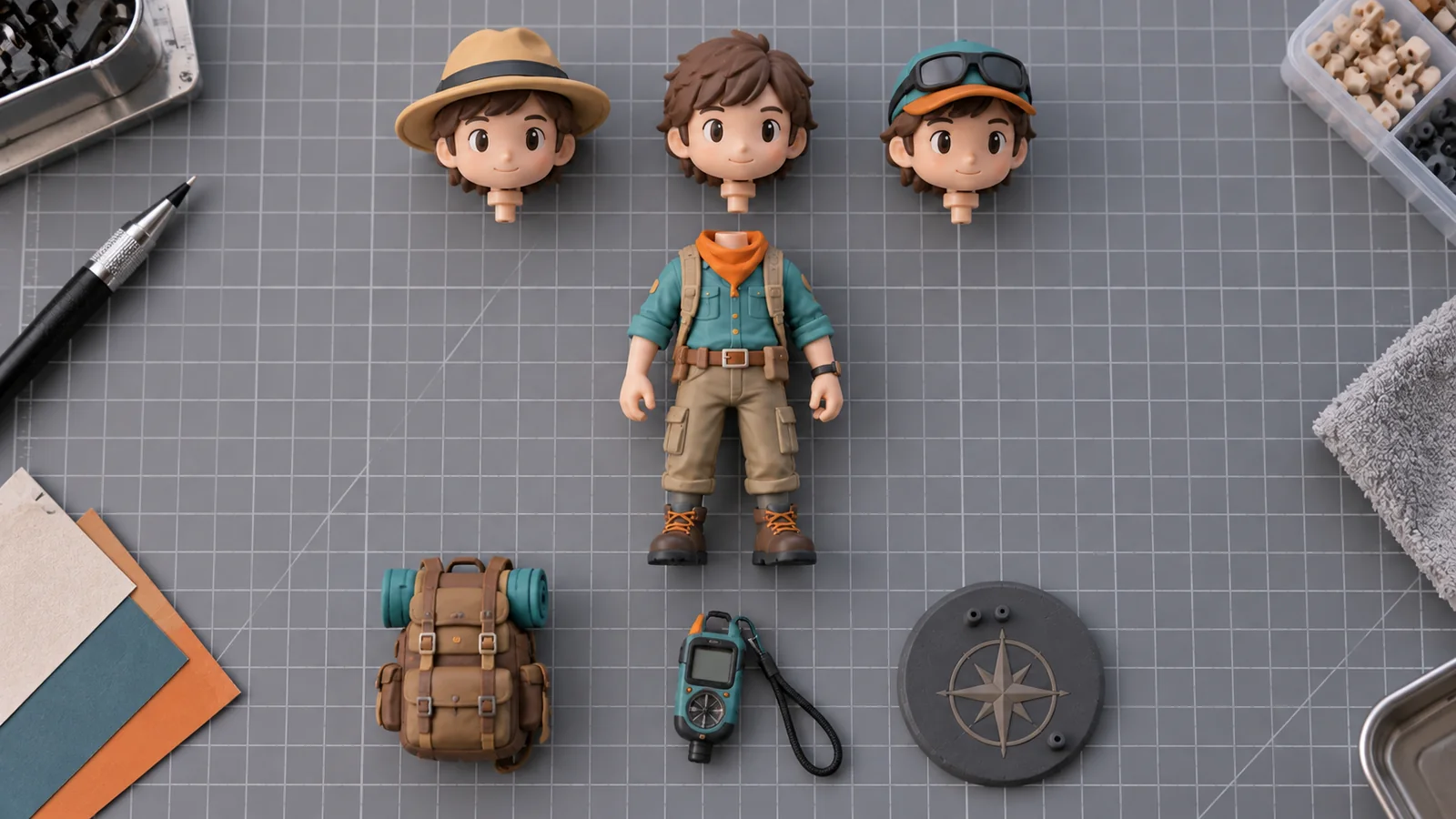
A small character series uses one shared body with three different characters:
- 1 shared torso design;
- 3 unique heads;
- 3 unique accessory sets.
That creates at least 7 controlled design groups before colorways and packaging enter the review:
1 shared torso + 3 heads + 3 accessory sets = 7 review groups
Round 1: Printed Prototype
The team reviews proportion, pose and accessory position. The shared torso is accepted as a design direction. Head B needs more hair clearance around the shoulder. Accessory Set 3 sits too close to the forearm.
The approval releases an update to Head B and Accessory Set 3. It does not approve molded material, production fit, paint or packaging.
Round 2: Tooling Sample
The tool-produced torso and connection parts are reviewed against the current model. Shoulder movement and the common head connection are accepted. A visible line on the forearm is returned for correction.
The team does not reopen the overall character proportion. That decision was already closed, and the new issue does not affect it.
Round 3: Decorated Pre-Production Sample
The assembled figure is reviewed against the current artwork, part list and packaging revision. The face print and glove boundary are accepted. The package insert still shows the old accessory silhouette, so packaging artwork remains open.
The release statement reads:
Approved: shared torso, three head configurations, current decoration and Accessories 1–2 against the listed revisions.
Open: package insert artwork and Accessory Set 3 paint reference.
Next action: correct the two open items and submit targeted evidence before production release.
Later Change: A New Accessory Connection
The buyer changes the connection on Accessory Set 3. The new connection can affect the hand fit, part list and tray position.
Reapproval stays focused on those affected points. The accepted face print and the two unchanged accessory sets remain closed.
The arithmetic makes the boundary visible. Approving one shared torso closes 1 of the 7 design groups, not the entire series. A later change to one accessory does not automatically reopen the other six.
Prepare the Next Sample Review
You do not need a perfect project package before asking for a review. You do need to identify the current version and the decision in front of you.
Prepare:
- product type and intended use;
- authorized artwork, 3D files, drawings or physical references;
- current sample stage and sample ID;
- the decision the sample must support;
- latest model, drawing, artwork, part-list and packaging revisions;
- intended size and expected quantity;
- material direction, if known;
- colors, finishes, logos and decoration files;
- parts, accessories, assembly and packaging requirements;
- target market and applicable testing or inspection needs;
- desired schedule and fixed review dates, if any;
- open issues, accepted deviations and approval owner;
- design ownership, license or other authorization status.
If a detail is unknown, mark it open. An honest open item is easier to control than an assumption hidden inside a folder called “final.”
The most useful request is specific: “We need to decide whether this sample can release the next tooling correction” or “We need a production reference that includes final decoration and packaging.” That tells the manufacturing team what evidence to prepare.
Frequently Asked Questions
Is a Pre-Production Sample the Same as a Golden Sample?
Sometimes, but not automatically. Teams use “golden sample,” “approval sample” and “pre-production sample” in different ways.
Define whether the physical unit is the controlled reference for production and inspection. Connect it to the current specifications, artwork and revision record. If it contains temporary parts or finishes, record those exceptions rather than relying on the label.
Does T1 Approval Mean the Product Is Ready for Mass Production?
Not automatically. T1 usually refers to an early tool trial, but the exact meaning should be confirmed for the project.
Record which molded-part requirements were reviewed, what corrections remain, and what the decision releases. Decoration, assembly, packaging, testing or production consistency may still require later evidence.
Can a Sample Be Approved From Photos?
Photos can support a limited appearance decision when the image, lighting, angle, scale and sample identity are controlled well enough for that purpose.
They may not provide suitable evidence for color, feel, fit, movement, material, hidden assembly or measurable characteristics. Match the evidence to the requirement. A photo approval should also state what was not reviewed physically.
Who Should Keep the Approved Reference Sample?
Identify where each controlled reference is retained and how both sides will recognize the same version. Some projects may keep buyer and factory references; others may use a different arrangement.
Whatever the arrangement, connect the physical reference to its sample ID, specifications and revision history. Mark replaced samples as superseded so they cannot return to production by mistake.
Define the Next Sample Decision
Before requesting another sample, decide what it must allow you to do next. Share the current files or visual references, the sample stage and ID, the points already closed, and the issues still needing evidence.
Include the intended size and quantity, material direction, colors, finishes, accessories, packaging, target market, testing needs and desired schedule where they affect the review. Add that context to the standard Project Details field when you contact FigCrafts.
FigCrafts can review the available information and help clarify which sample stage and approval record should come next. The review does not replace product-specific testing or an agreed inspection plan, but it can reduce ambiguity before further tooling or production work is released.
We work with brand-owned, licensed or otherwise authorized designs. Proof of rights may be requested before production.