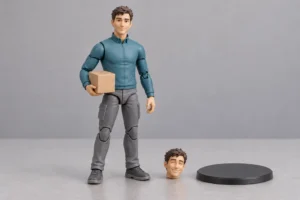

Start your first custom action figure release with the character’s defining appearance and the actions you want the finished figure to perform. Include the parts those requirements depend on. Assess additional expressions, equipment and display options against that same product definition.
A gripping hand may be essential to the pose in your product concept. An alternate expression may be easier to defer if the main head already gives the character the look you want. A display base needs its own decision: whether you include it depends on the display conditions you intend to offer.
Before postponing an item, check its relationship to the body, other parts, decoration and packed contents. Record the changed requirements, then ask the manufacturing team to review the revised configuration. A shorter parts list alone does not establish which tooling or production work changes.
Keep a separate record of the development work you are authorizing now. A proposed release can contain open decisions while you commission a defined engineering or prototype deliverable. Name those decisions so everyone knows what the next piece of work needs to resolve.
Start With the Experience Your First Release Must Deliver
Write down the appearance and actions that would make the figure feel complete to its intended buyer. Identify the silhouette, expression and character details you need to preserve. Then describe how you expect the finished product to be posed, handled or displayed with its included items.
Be specific about the movement that matters. “Hold the supplied object in the agreed display pose” gives the design team a requirement to work toward. Record the pose and object together, then carry that requirement into the action figure articulation requirements. Engineering still needs to establish how the proposed construction can achieve it.
Decide who can approve a change to that experience. Procurement may identify an item to postpone, but the product owner needs to decide whether the remaining configuration still represents the release they intend to sell.
Keep agreed fit, function and inspection requirements attached to the product as you compare options. Reducing the number of expressions or accessories changes the offer. Any proposal to change how the remaining parts must perform needs its own explicit review.
Choose Features by Their Role in the Product
Give each proposed feature a job before deciding whether to include it. Ask what the buyer loses if it is absent, what other parts depend on it, and whether another configuration could satisfy the same requirement.
Illustrative Buyer Scenario: An original courier figure is planned to hold an included parcel. The proposed options include an alternate expression head and a display base. These are hypothetical product requirements; engineering, fit and production scope remain unconfirmed.
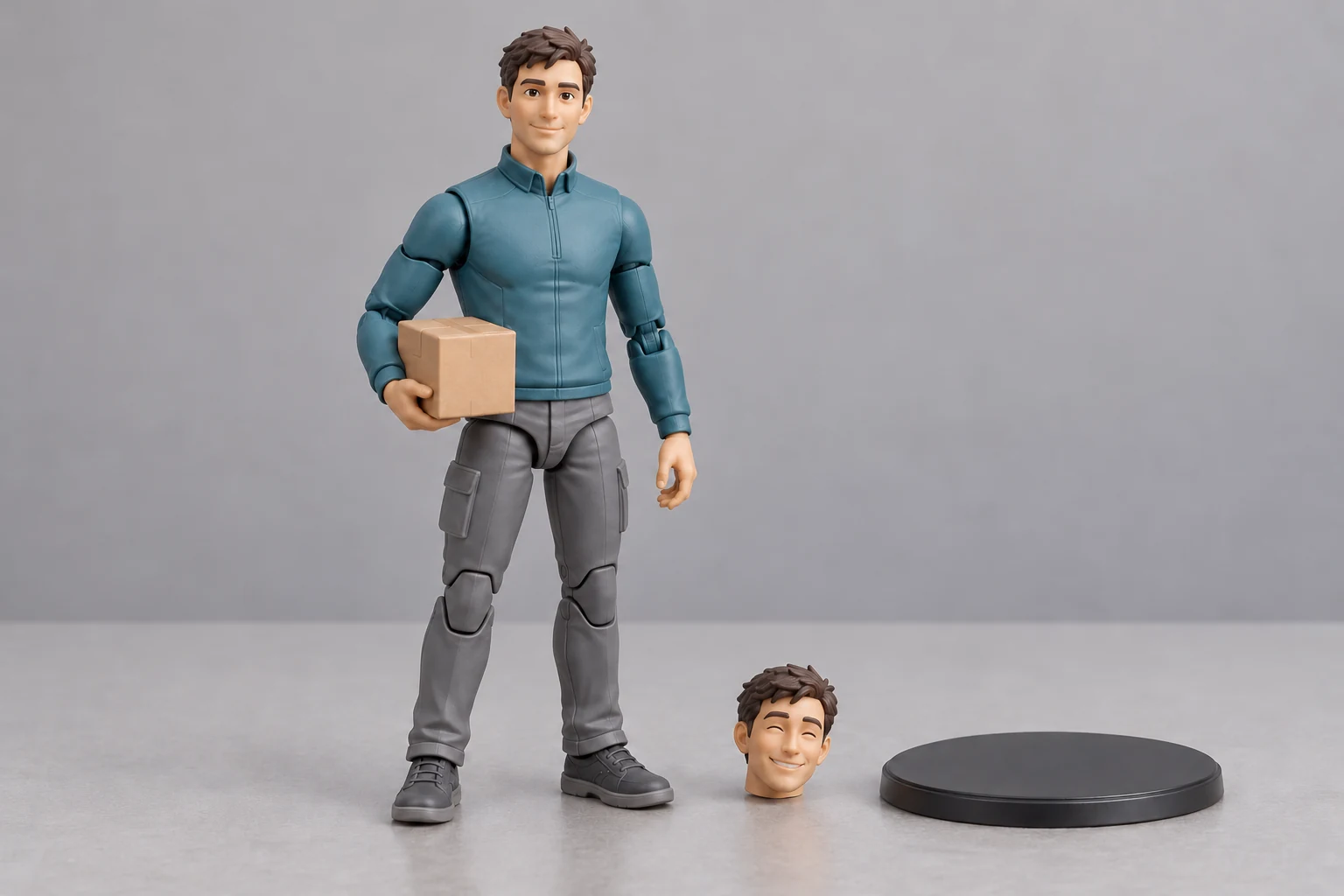
| Feature | Product Role | Proposed Release Scope | Reason and Open Decision |
|---|---|---|---|
| Main head and defining body details | Express the courier character | Include | Identify the essential appearance; confirm the proposed construction through the agreed review. |
| Parcel and matching gripping hand | Support the intended parcel-carrying display | Include together | The display requirement depends on both items; the actual grip remains to be confirmed. |
| Alternate expression head | Offer another expression | Defer, subject to the appearance brief | Confirm that the main expression is sufficient; future head-to-body fit remains open. |
| Display base | Support the intended display conditions | Undecided | Establish whether the chosen display requires it before omitting it. |
The parcel has a stronger reason to remain than its label as an “accessory” might suggest. It is part of the defining display. The alternate expression adds another choice, which could be deferred if the main expression already meets the first-release brief.
If the proposed set exceeds your available resources, you can reconsider the product requirement itself. You might choose a different display pose and ask the manufacturer to review the resulting configuration. Record that as a changed product decision, with updated drawings and contents. Keep the earlier pose out of current product imagery if it no longer represents what you intend to supply.
Assign a reason to each choice. “Deferred because the main expression meets the release brief” gives the team something to check. “Optional” alone leaves that judgment unstated.
Review What Changes When You Defer an Item
For the hypothetical courier, assess each proposed change against the parcel-carrying display requirement.
Removing the parcel would change the intended display pose. Decide whether that pose remains a requirement before revising the hand or packed contents. If it does, retain the parcel and its associated grip requirements in the first-release proposal.
| Proposed Change | What It Alters | Review Needed | Scope Status |
|---|---|---|---|
| Defer the parcel | Parcel-carrying pose and matching hand requirement | Decide whether to revise the pose requirement; review affected parts and packed contents. | Conflicts with the current requirement |
| Defer the alternate head | Available expression; future head-to-body fit remains open | Confirm the main expression meets the release brief; define the future pairing separately. | Proposed deferral |
| Omit the display base | Conditions for the intended display | Identify the required pose and support; review suitable product or sample evidence. | Open until the display requirement is resolved |
An alternate head can follow a different path. If the main expression meets the current character brief, record the alternate as deferred. That choice leaves future fit open; identify the head and body revisions when the later design is ready for review.
Have the product owner settle any change to the intended experience before engineering treats it as a revised requirement. Otherwise, a missing item in the part list could be mistaken for an approved design change.
Give the manufacturer the revised part list and affected drawings. Ask which tooling, decoration, assembly and packaging work changes, and which earlier conclusions still apply. Request an updated quotation against that revision once the scope has been reconciled.
Keep the decision, its reason and the remaining question together. When you authorize the change, name the revised configuration and the specific work that may proceed.
Define Future Options Before Reserving Them in the Design
Describe a future option clearly enough for engineering to identify the current parts it could affect. Give it a name, an intended use and the body or component it is expected to work with. State whether a design exists or whether it is still a concept.
Decide whether the later option must fit figures from the first release or may use a revised body in a later release. That choice changes the requirement you are asking the manufacturer to assess. If it must work with already supplied figures, make that expectation explicit while the first-release design is under review.
For the courier’s deferred expression head, identify which body version it is intended to fit. Ask whether any first-release design decisions need to account for it now. The future head and its fit still need confirmation when there is a design to assess.
Record any constraint you decide to retain in the current design and its effect on the first-release appearance or use. Keep less defined ideas in a separate future-options record, with their status visible. A general wish to expand the range leaves the required combinations and design consequences unresolved.
Separate Your Release Configuration From the Work You Authorize Now
State both the proposed finished product and the development work you want to buy at the current stage.
For the courier, the release proposal could include the main head, body, parcel and gripping hand, with the display base still open. The immediate work could be an engineering review of the intended pose and the parts needed to achieve it. Agree on that deliverable before work begins.
If you commission a prototype, identify which proposed parts it includes and which questions it is intended to resolve. A body-only sample leaves different questions open from a sample that includes the parcel and its intended grip. Keep those distinctions in the action figure sample approval record.
Name the work that may proceed, the file revision and any conditions still open. A proposed product configuration can guide development while tooling and production remain subject to their own agreed scope and authorization.
Record the First Release Under One Revision
Give design, procurement and manufacturing one current release record. Keep the selection reasons with the parts list so a later reviewer can understand why an item was retained or deferred.
- Configuration and revision: Name the release, date the record and identify the current design files.
- Required experience: Record the defining appearance, poses, holding requirements and display conditions.
- Included contents: List the parts and packed quantities, with deferred and undecided items identified separately.
- Decision reasons and dependencies: Explain each choice and name the related parts or questions that need review.
- Matching references: Align product images, decoration references and packaging contents with that configuration.
- Approval and current work: Name the approval contact, the work authorized now and the changes that require another review.
Keep buyer selections and manufacturing conclusions identifiable. An item can be required for the release while its construction remains unresolved. Name the open question and who will resolve it before the affected work advances.
When a choice changes, issue a revised record and identify the affected references. If the product image still shows an accessory that the current list excludes, settle the discrepancy before approving the related work. Carry the confirmed configuration into action figure manufacturing costs and order planning.
Align the action figure packaging and pack-out requirements with the same contents. Boxes, instructions, trays, blisters and packaging materials are partner-produced. FigCrafts coordinates the project, incoming confirmation, assembly and final pack-out.
First Action Figure Release Questions
Does a First Release Need Fewer Accessories?
No. Select the accessories needed for the experience you intend to offer. A gripping hand and the object it holds may both be essential to a defining pose. Another expression or equipment option may be deferred if the remaining configuration satisfies the brief. Record the reason for each choice, then have the manufacturer review its design and production consequences. There is no universal accessory count that defines a complete first release.
Can Deferred Accessories Be Added Later?
They can be proposed for later development. Identify which first-release parts they need to work with and whether that compatibility is a current requirement. Ask engineering what needs attention before the initial design advances. When the later accessory design is available, review it against the identified parts and revisions. Keep its tooling, fit, decoration and packing scope open until those details have been assessed and agreed.
Does Removing an Accessory Reduce Tooling Costs?
Not automatically. A family mold can contain different parts, so deleting an accessory does not by itself identify which tooling work disappears. Ask the manufacturer to review the revised configuration, explain the actual tool changes and update the quotation where needed. Confirm whether any related decoration, assembly or packaging work changes too. Base the purchasing decision on that reviewed scope.
Send Your First Release Scope for Manufacturing Review
Send your current character files and target size for a custom action figure manufacturing review. Include the first-release parts list, the appearance and poses you need, and the items you want to defer. Explain the reasons for those choices and identify future options that could affect the current design.
Share quantity assumptions by version, finish and packaging direction, target markets and schedule. Name your approval contact, open decisions and the engineering or prototype work you want to discuss next.
FigCrafts can review the available design and proposed manufacturing scope with you.
We work with brand-owned, licensed or otherwise authorized designs. Proof of rights may be requested before production.