
Develop authorized vinyl character products with one team for 3D engineering, prototypes, tooling, in-house vinyl rotocasting, painting, printing, assembly, inspection and final pack-out.
Is a Vinyl Toy the Right Product Type?
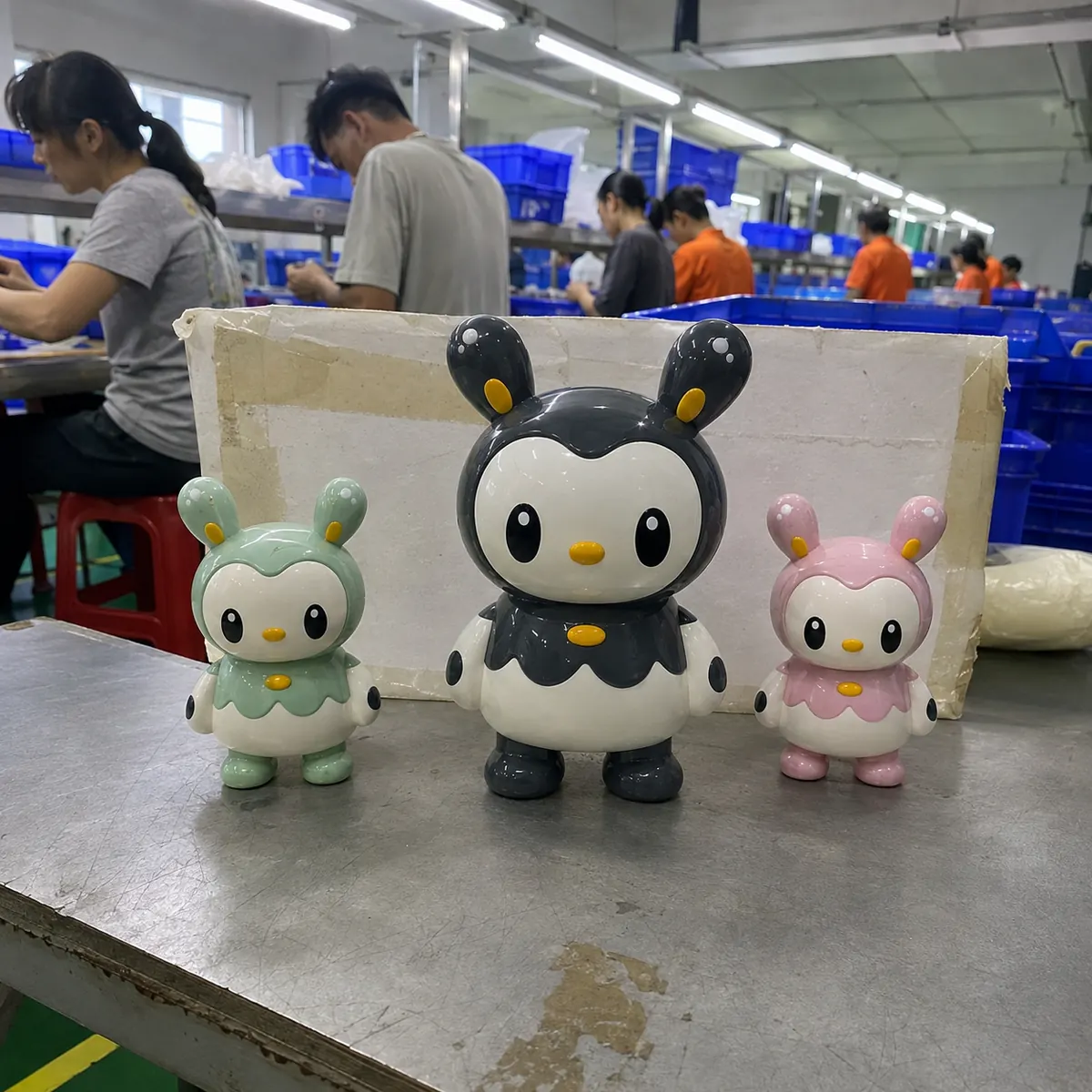
Choose this route when a hollow vinyl form, strong silhouette, smooth surface and collector-facing presentation define the finished product.
Designer & Art Toys
Original or authorized characters led by sculptural form and surface.
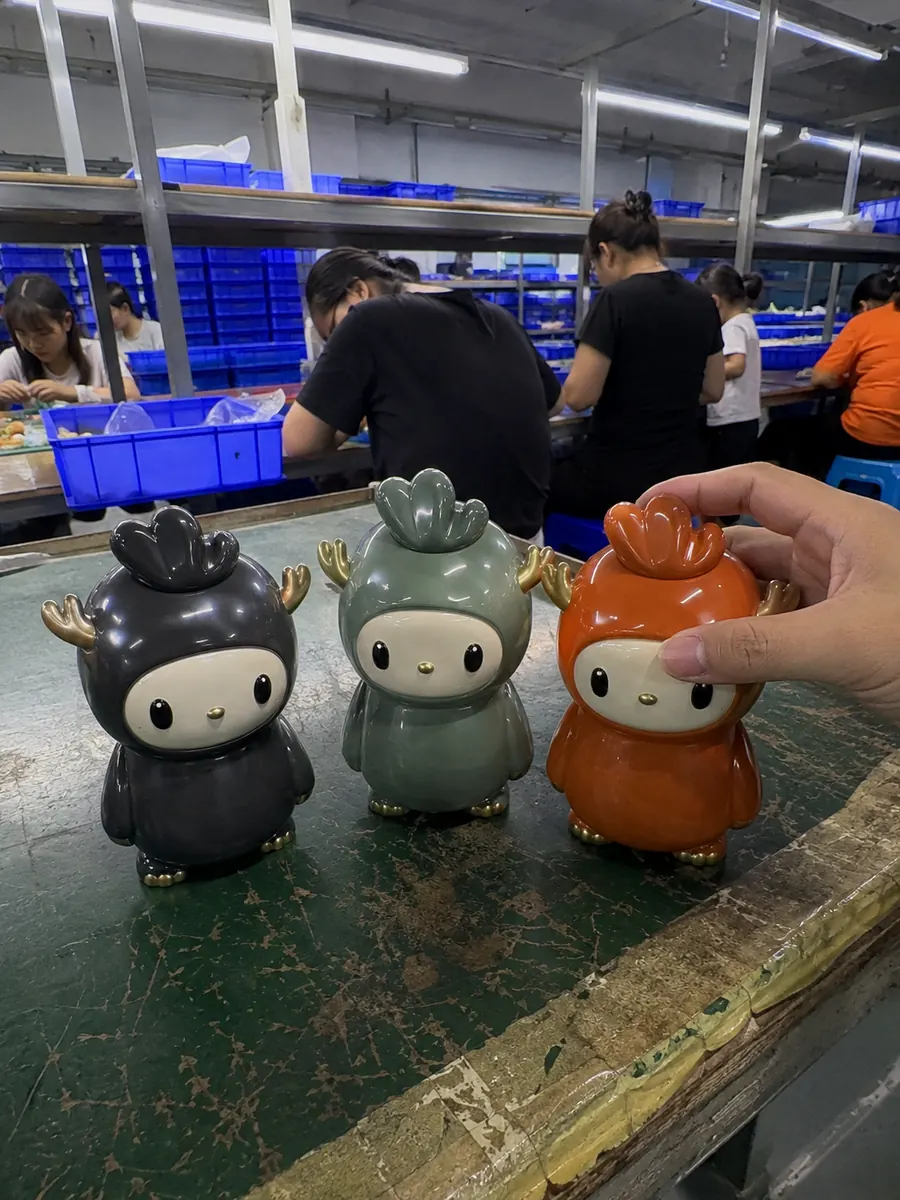
Mascot & Character Programs
Brand-owned characters developed for merchandise, campaigns or repeat product programs.
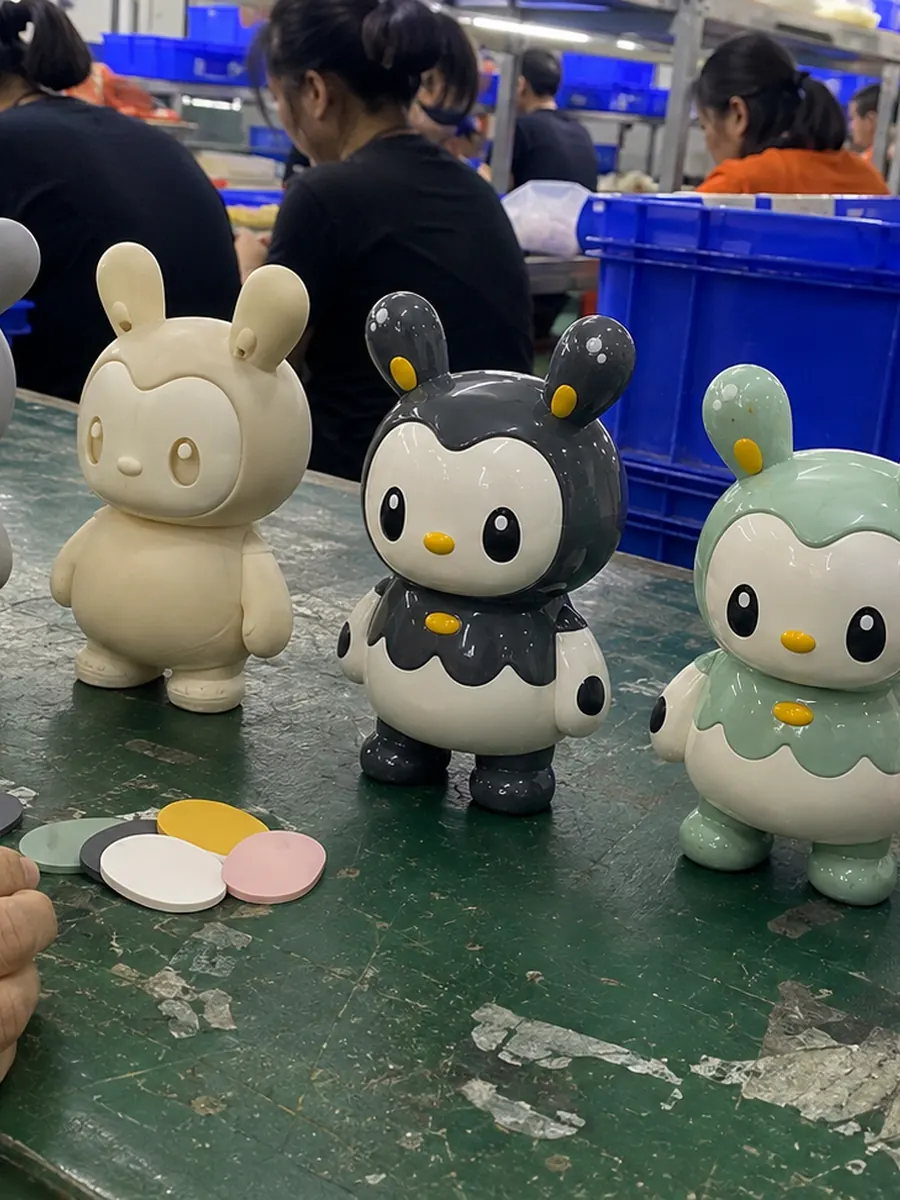
Characters & Colorways
Multiple editions or colors planned around shared engineering decisions and per-SKU quantities.
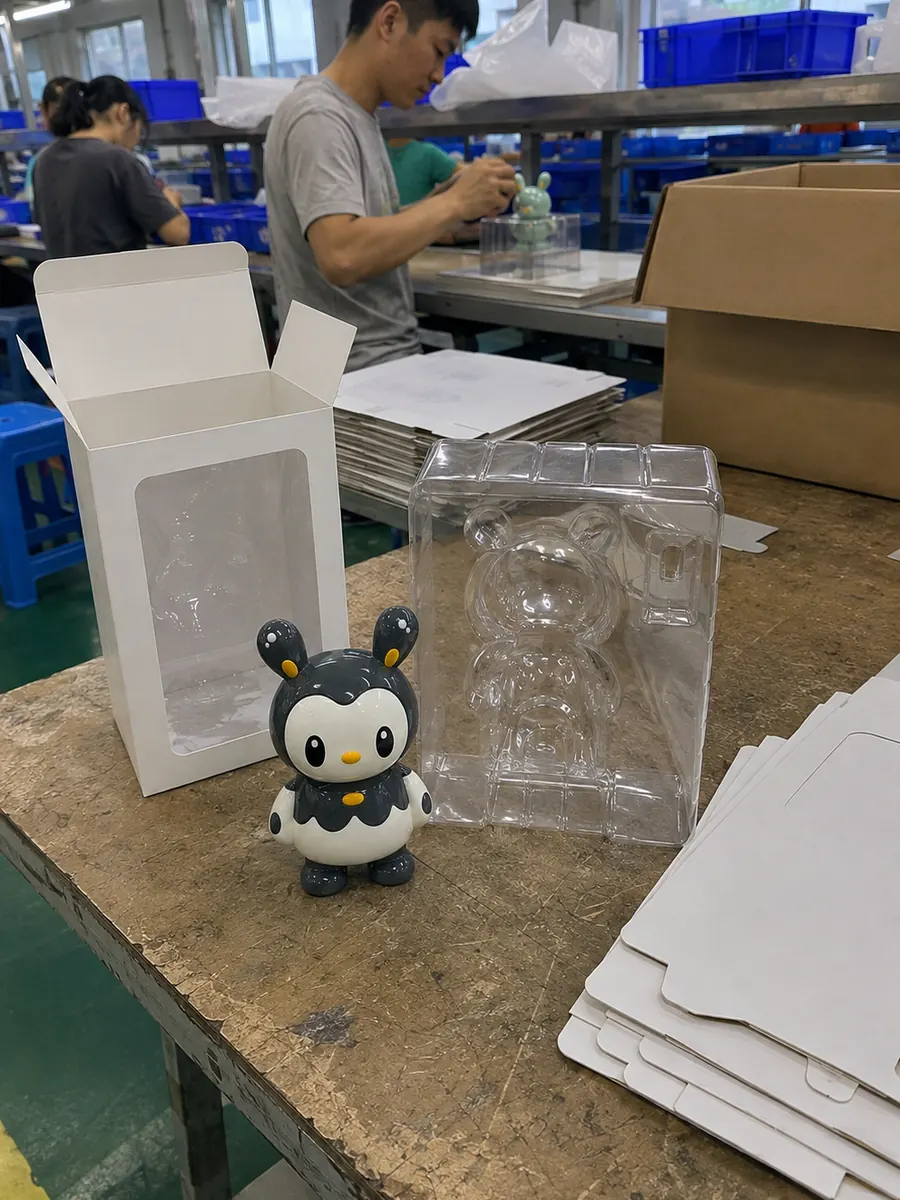
Retail Art Toy Sets
Finished figure, accessories, protective insert and printed packaging coordinated for a defined release.
Protect the Character While Engineering a Producible Hollow Form
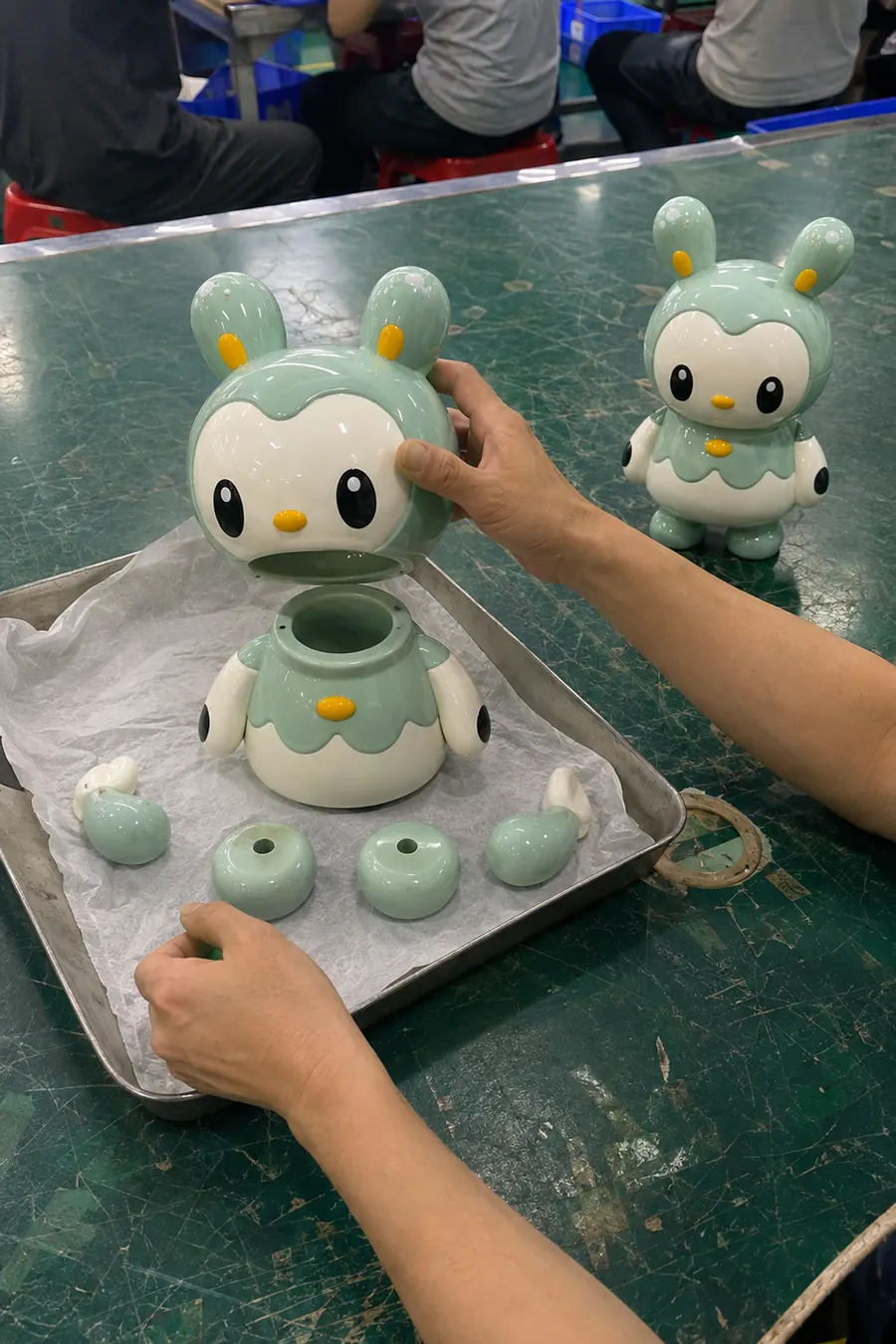
Large heads, narrow necks, raised arms, deep undercuts, hidden seams and separate accessories can change tooling and part construction. These decisions belong in the digital and prototype stages—not after the appearance is treated as final.
Silhouette & Proportion
Protect the character’s visual identity while confirming size, volume, standing points and display footprint.
Part Split & Release
Review head, body, limbs, ears, props and openings so hollow parts can be formed, removed and finished.
Wall, Weight & Stability
Evaluate the intended hollow construction, center of mass, base or support and expected handling condition.
Seams, Trim & Openings
Place trim, join and opening areas away from critical facial or display surfaces where the design allows.
Interfaces & Inserts
Define how separate parts, plugs, bases, accessories or mixed-function components connect and remain secure.
Color & Packaging Envelope
Connect formed color, paint, print, loose parts and finished dimensions to the approved retail presentation.
Material and feel direction
Softness Is a Project Specification, Not a Complete Material Answer
Material selection is confirmed by form, required feel, interfaces, appearance, production method and applicable testing requirements.
From Authorized Design to Packed Vinyl Toys
Approvals are placed before production tooling, bulk decoration and pack-out. FigCrafts performs vinyl rotocasting in-house and coordinates approved packaging components through established partners.
Brief & Rights Review
Review authorization, artwork or 3D files, size, quantity, market, finish and packaging direction.
3D & Part Engineering
Develop proportions, hollow part splits, openings, interfaces, stability and decoration logic.
Prototype & Approve
Confirm the form, scale, balance, part relationships, surface and color direction.
Tooling & Trial
Prepare the approved tooling route and review trial parts before bulk production.
Rotocast, Trim & Finish
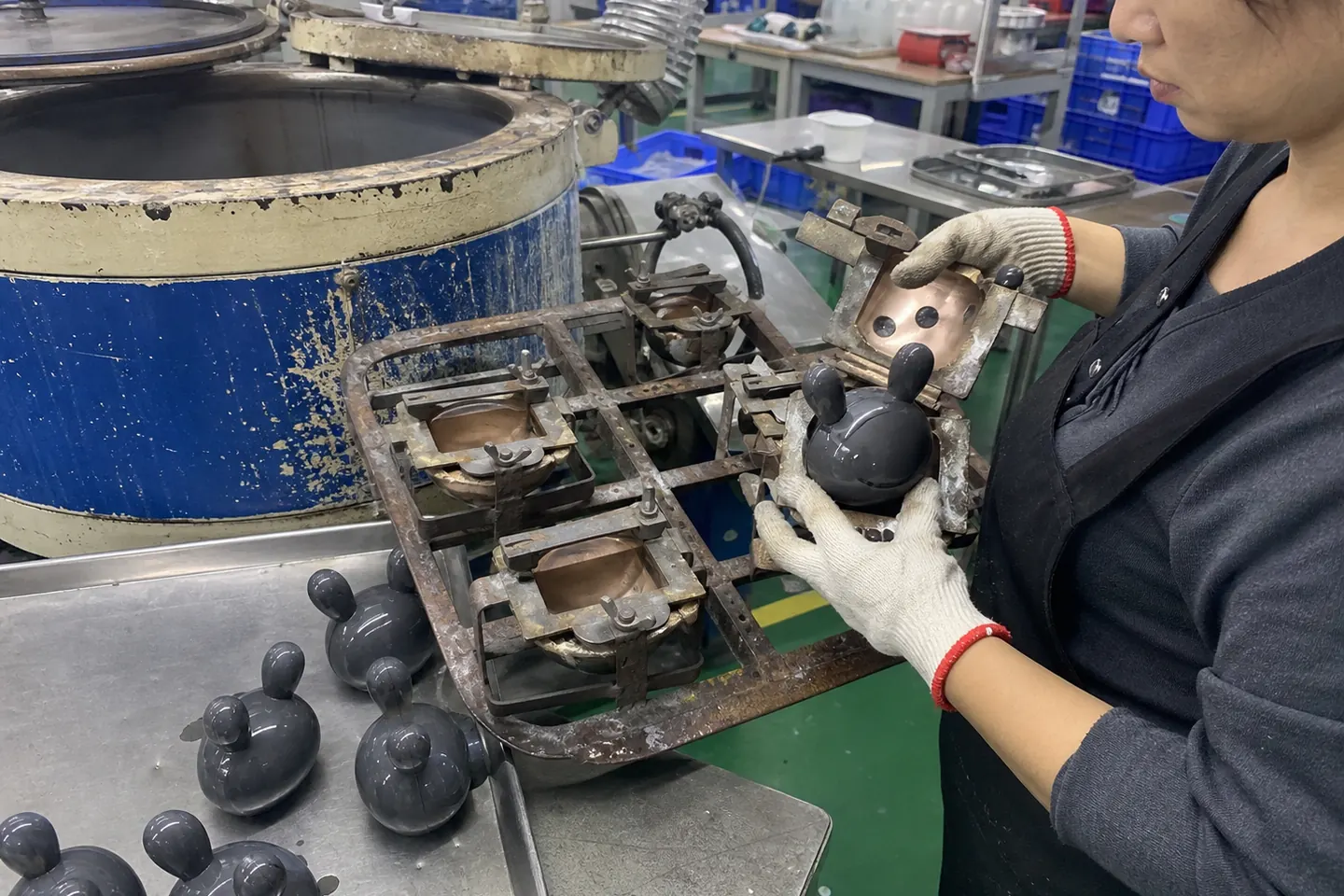
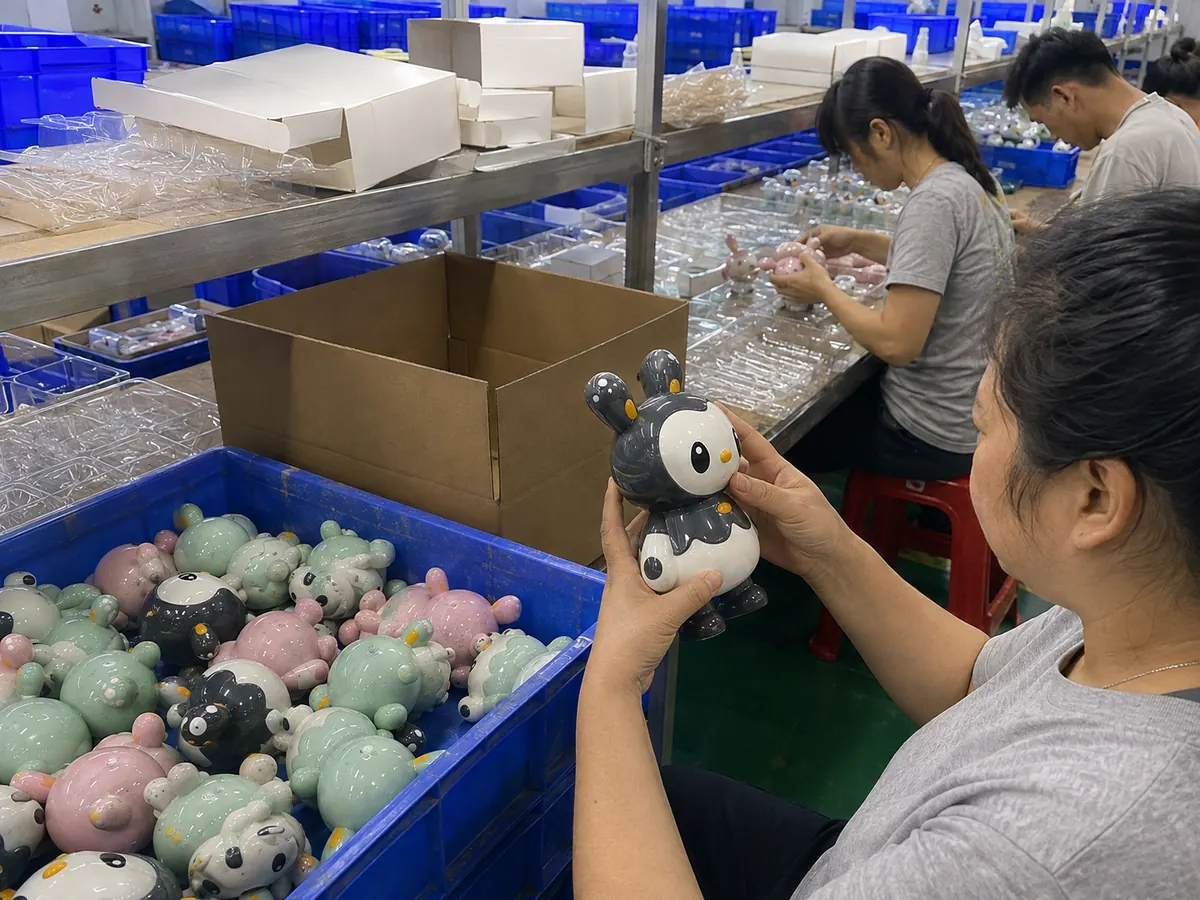
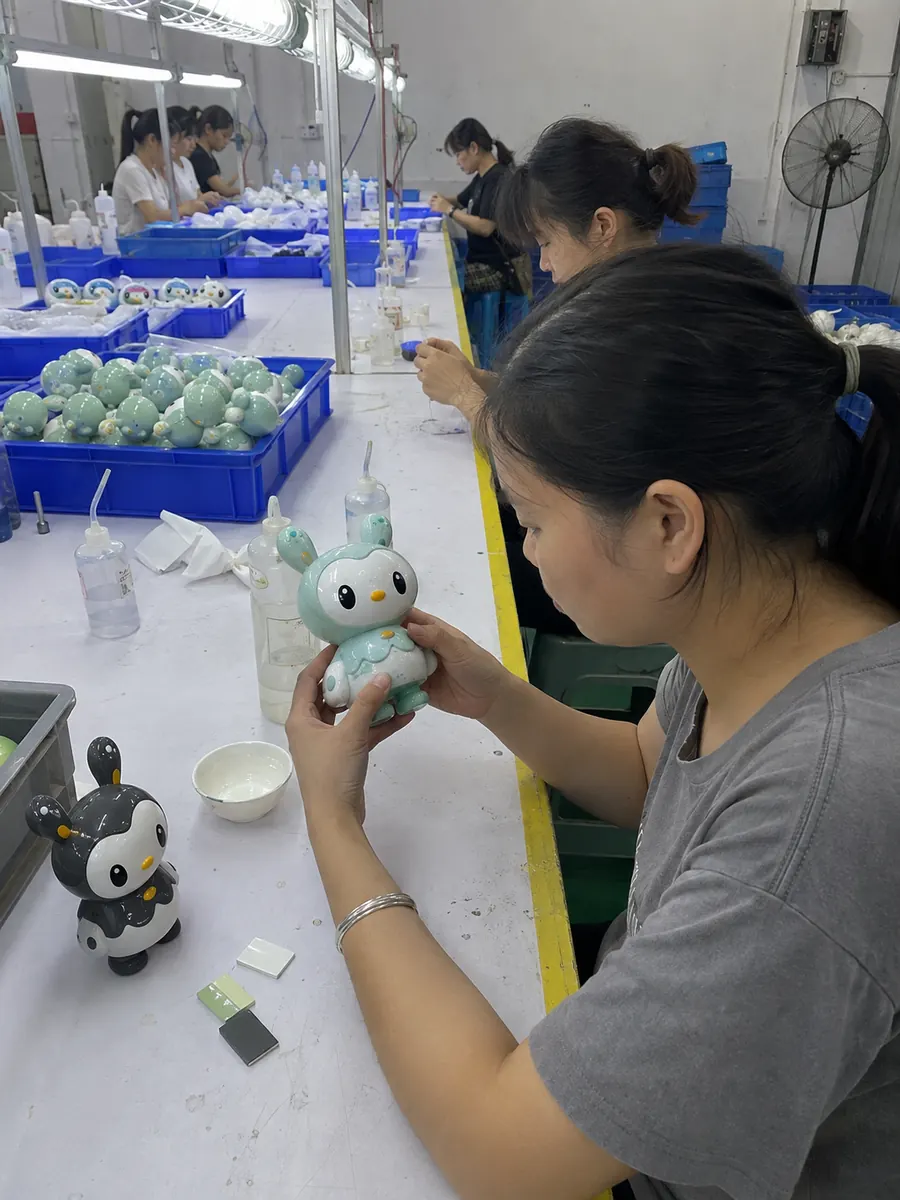
Form hollow parts in-house, prepare seams and surfaces, then apply approved decoration and assembly.
Inspect & Pack
Check agreed appearance and completeness criteria, then complete final pack-out on-site.
What Determines a Vinyl Toy Quote?
Vinyl toys are judged at close range by silhouette, face, seams, color, gloss, print and pack-out. The quotation must therefore connect the approved appearance to construction, quantities, variants and packaging.
Design & Size
Character views, finished dimensions, physical references and available 3D files.
Parts & Construction
Hollow bodies, separate limbs, props, bases, inserts, openings and interface direction.
Quantity & SKUs
Total order quantity and the split per character, edition, colorway or package version.
Decoration
Color count, paint masks, pad printing, hand detail, graphics and finish targets.
Packaging
Protective insert, printed box, labels, instructions and export carton plan.
Market & Approval
Target market, testing plan, sample stages, inspection needs and buyer response time.
Vinyl Toy, Collectible Figure or Prototype Route?
Industry labels overlap. Confirm the forming method, hollow or solid construction, part design, quantity, finish and commercial use before the detailed material specification is approved.
Vinyl & Designer Toy
Best for a hollow rotocast character product led by silhouette, surface and colorways.
PVC & Collectible Figure
Best for a static, often multi-part display figure led by sculpt detail, joins and painted assembly.
Review Static Figure Route →Prototype or Low-Volume Route
Consider a suitable development or casting method when the immediate need is a sample or a qualified limited-volume project.
Review Prototype Route →Vinyl Toy Manufacturing FAQ
Request a Vinyl or Designer Toy Project Review
Share the files and product details you have now. Our team will review manufacturability, identify missing information and recommend the next step. Initial feedback is typically provided within 1–3 business days once sufficient information is available.