

Choose a manufacturer who can explain how they will handle your specific figure or model kit, show relevant experience and put the work, approvals and responsibilities in writing. Before you commit, make sure the quote covers the product you actually want to receive.
The conversation gets easier when you start with a concrete requirement. If your figure has a removable camera, ask who reviews the connection, which sample will be used to check it and whether the camera is included in the finished pack. A photo of a similar-looking toy leaves those questions open.
A model kit adds another kind of coordination. Molded parts, loose accessories, decals and instructions need to belong to the intended boxed version. Ask what the supplier will make, what partners will provide and who will confirm the complete kit before packing.
You don’t need every engineering decision settled before you start talking. Mark what is agreed and what still needs review. Then look for replies that identify those open points and propose a clear next step, so you can compare each offer against the same project.
Look for Experience With Your Kind of Product
Start with the parts of your project that need careful handling. Is it a removable accessory, a printed face, a working joint or a complete kit that the customer will assemble? Ask the supplier to explain comparable work they can share with permission.
For custom action figure manufacturing, that might mean a product with similar accessory and assembly requirements. For custom plastic model kit manufacturing, it might mean organized molded parts, loose components and an instruction-led build. A finished figure and a boxed kit ask different things of a production team.
ASQ’s supplier selection criteria include previous performance with the relevant product and technical support. Ask what the available experience says about the work your project needs.
| Product Requirement | Evidence to Ask For | What Still Needs Confirmation |
|---|---|---|
| Removable accessory | A shareable example of comparable assembly work | Which connection and supplied state your project requires |
| Printed or painted details | References showing the agreed decoration scope | Which artwork, surfaces and finish are included |
| Complete boxed product | A shareable packed reference and contents record | Which configuration the records represent and who checked it |
Ask what stage the reference represents and which tasks the supplier actually performed. An early appearance sample and a completed production item may look similar in a photograph.
Confidentiality can limit what a supplier can show. A redacted record or an authorized description of the work may still support the discussion. Keep any conclusions within what the material demonstrates, and identify the project requirements that remain unconfirmed.
Confirm Who Handles Each Part of the Project
Find out who will carry your requirements from the first engineering discussion through final packing. For each major job, ask who performs the work, who coordinates the next handoff and who confirms the output.
This is especially useful around purchased components. A tray maker may need the figure’s supplied configuration; the packing team needs the correct tray and product references. Ask who keeps those inputs aligned and who handles a mismatch when the materials arrive.
FigCrafts handles design and 3D modeling, prototype development, tooling design and machining, injection molding, vinyl rotocasting, resin casting, decoration, assembly, internal inspection and final pack-out in-house. Packaging boxes, instructions, trays, blisters and packaging materials are partner-produced; FigCrafts coordinates the project, incoming confirmation, assembly and final pack-out.
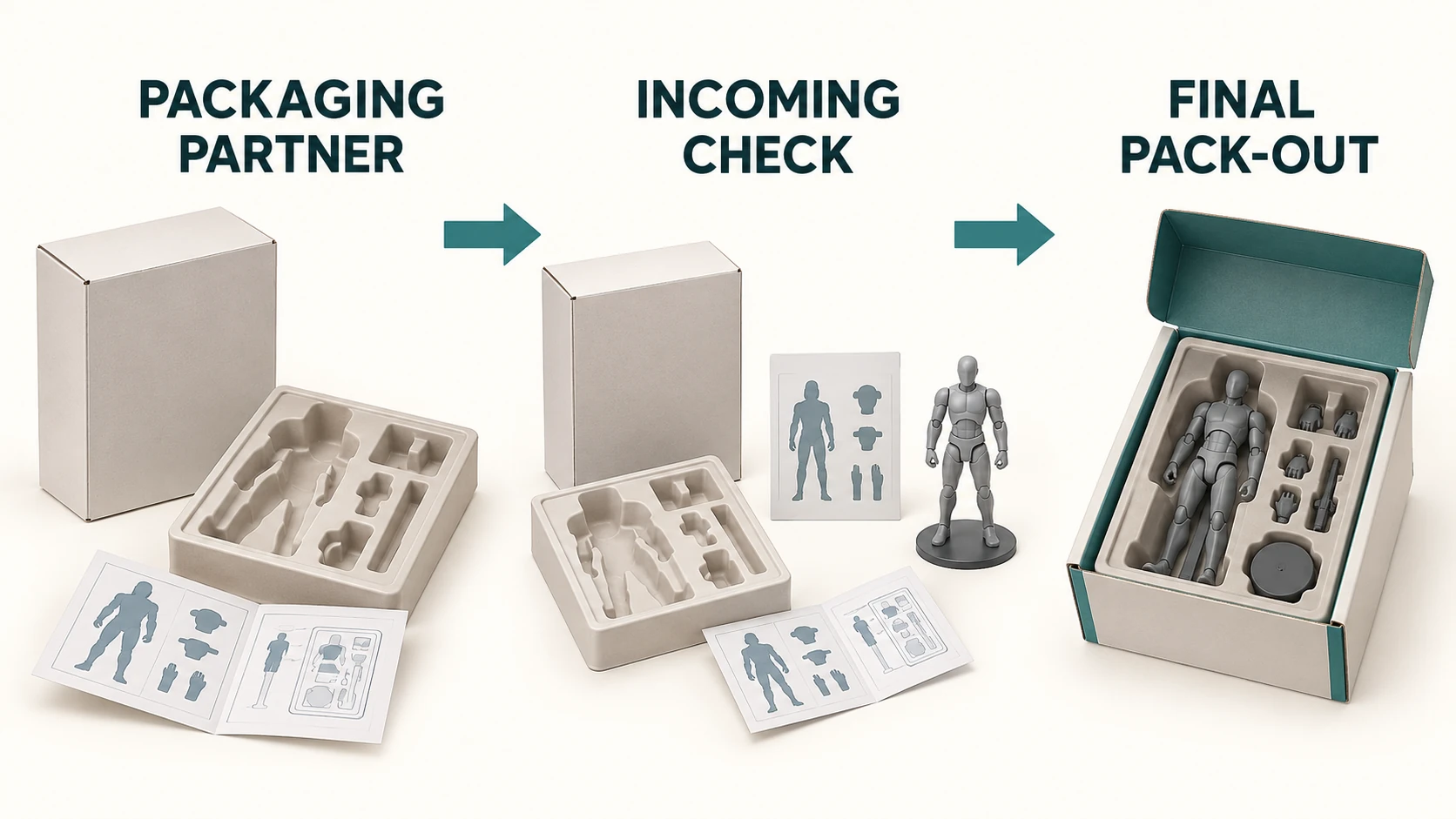
Keep the discussion tied to your actual order. Confirm whether the quoted work includes producing printed materials, developing their content, or checking them against files you supply. Those are different responsibilities, and the scope needs to be stated.
Ask who you contact when an issue crosses several jobs—for example, a product revision that affects both a tray and the packed reference. The person answering your emails should be able to identify who will assess the change and what decision is needed next.
Ask How Engineering Questions Will Be Resolved
Give the supplier an unresolved point from your own project and see how the discussion develops. A reply that identifies the current file, explains an assumption and asks for a decision gives you something concrete to work with.
Illustrative Buyer Scenario
For the fictional Harbor Scout robot, the camera pod is intended to be removable. The concept image shows it attached, but the current files leave the supplied state open. Before proposing a connection, the supplier needs to understand whether the pod arrives fitted or packed separately and what the buyer expects the customer to do with it.
You can ask: “The camera should be removable. What information do you need to review the connection, and what will the next sample let us check?” No connection design or test result has been established in this scenario.
Look for a reply that separates the questions needing your decision from those needing engineering review. If removal or appearance requirements are unclear, keep them open rather than treating a casual “yes, we can do that” as design approval.
Record the file revision being discussed, the point needing review, the person responsible for the next response and the output to be returned. You do not need to prescribe the supplier’s software or meeting routine. You do need a way to recognize when the original question has been resolved.
Review the Sample and Inspection Plan
Ask the supplier to connect each proposed sample to a project decision. A sample request should identify what you intend to review and which parts of the product it represents.
For prototype and sample-making, clarify the material, process, finish and assembly state represented by the sample. If you are checking a removable accessory, ask which connection requirements can be reviewed at that stage and which still depend on later work. Name the person who will review it and the reference they will use.
Then discuss project quality control for the production goods. Ask how the agreed requirements will be checked against the identified product version and what records are included in the proposed inspection scope.
You can keep the initial discussion focused:
- Which product, version or lot will the check cover?
- Which characteristics need attention, and what references define them?
- What result or record will be returned for review?
- Who handles an unresolved issue and confirms the next action?
When a supplier shares a certificate, sample report or inspection record, ask what it covers. Check the named organization or product, scope and date rather than assuming every document applies to your order.
Make the distinction between sample review and production inspection visible in the proposal. A sample can support a particular approval decision; it does not identify which checks will be carried out on the goods you later receive. Confirm the included outputs and any work still to be agreed.
Compare Quotes Against One Project Brief
A quote is easier to compare once you know what is arriving in the box. Match the project revision, finished configuration, quantity per version, materials, decoration, packaging and delivery scope. If a supplier has assumed something different, ask them to mark it and quote the change separately.
Illustrative Buyer Scenario
Imagine Harbor Scout, an original inspection robot supplied as an assembled figure with a removable camera pod, a display base and a printed face. The intended package includes a fitted tray and retail box. Supplier A and Supplier B have received the same product brief, but their offers list different scope.
The names and quote details are fictional; this is not a FigCrafts project or an actual supplier quotation.
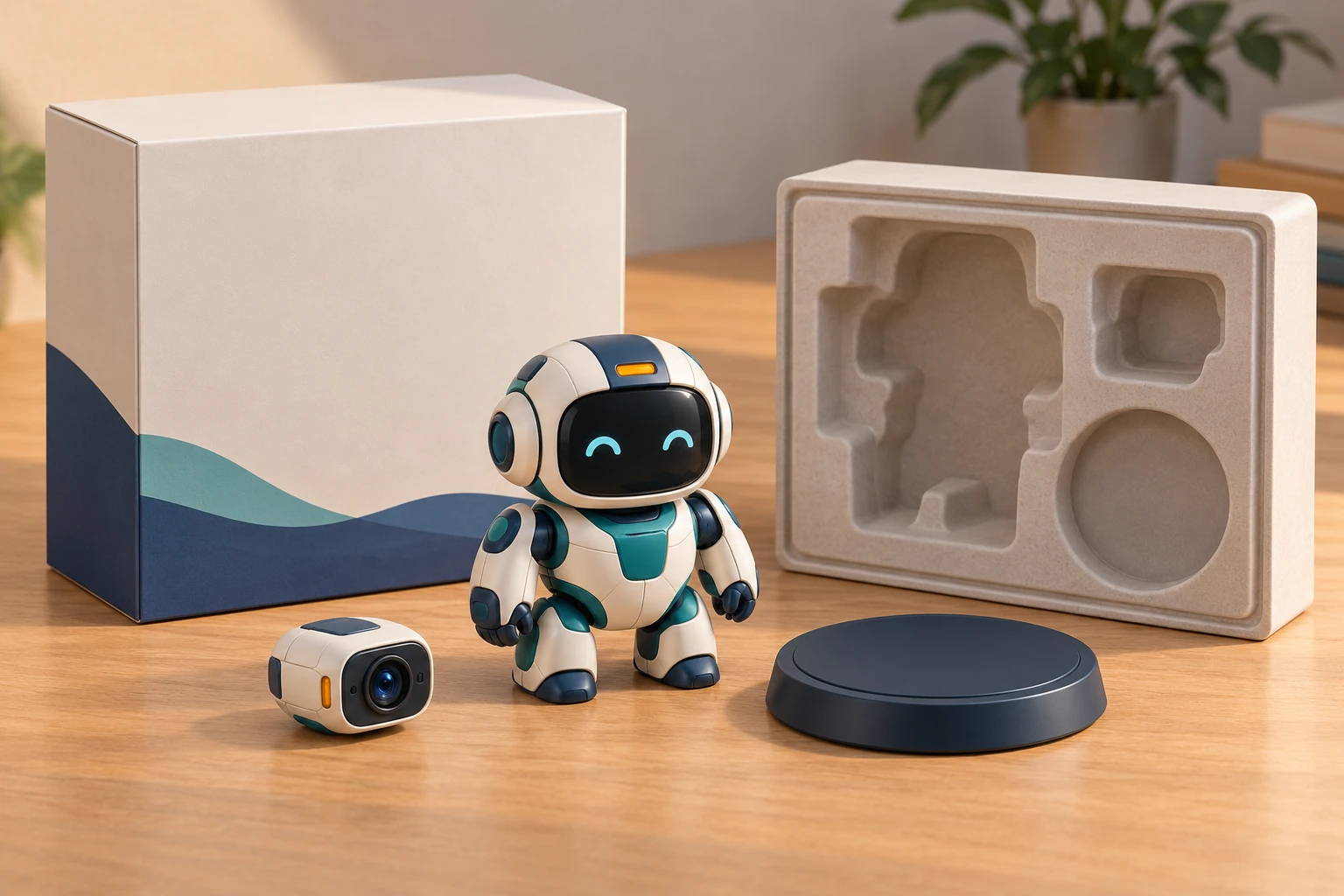
| Item | Supplier A | Supplier B | Buyer Action |
|---|---|---|---|
| Camera Pod and Base | Camera pod included; base excluded | Both included | Confirm whether to add the base to A’s scope |
| Decoration and Assembly | Face printing included; camera attachment unspecified | Face printing and assembly included | Define the attachment and supplied state |
| Retail Packaging | Box included; fitted tray excluded | Box and fitted tray included | Match packing components and final packing work |
| Approval Outputs | Sample and inspection scope to confirm | Sample and inspection outputs listed | Match purpose, product revision and approval responsibility |
An “included” label still needs a defined deliverable. Which sample? Which packing arrangement? Which inspection scope? A line saying “QC included” does not identify the goods, checks or records covered.
The base and tray are visible gaps. The unspecified attachment needs a decision too: will the camera arrive fitted to the figure or packed separately? Settle that supplied state against the brief before asking for a revised offer.
Also confirm who sources the packaging, who checks it on arrival and who completes final packing. Those jobs can be handled by different businesses; the quote needs to show where coordination sits.
Ask both suppliers to return the quotation against the same revision, with exclusions and open items marked. Then compare the work and responsibilities you have actually been offered.
Clarify Design, Confidentiality and Tooling Terms
Agree how design files will be shared before detailed exchange. Ask who may receive them, which project purposes they may be used for and what confidentiality arrangements apply. If you want an NDA in place first, raise that before sending the protected files and arrange the appropriate contract review.
We work with brand-owned, licensed or otherwise authorized designs. Proof of rights may be requested before production.
Tooling deserves its own clarification. A line labeled “tooling” needs a description of the work and physical assets covered. For tooling and mold-making, ask how those assets and the applicable commercial terms will be identified.
Keep the open questions specific:
- Which tools, inserts or fixtures are included in the quoted scope?
- What ownership, custody, use and maintenance terms will be recorded?
- What conditions apply to a later repair, change or transfer?
- Who will confirm the terms and record subsequent changes?
Ask the responsible commercial or contract contacts to resolve those points in the applicable agreement. Keep proposed terms separate from accepted terms, and check that the asset description matches the quoted work.
When a term is unclear, ask for clarification before proceeding. The project needs an agreed answer rather than an assumption about what a tooling fee or a confidentiality document includes.
Check What Happens When You Change or Reorder
A repeat order can begin with a simple email: “Same as last time.” Make sure both sides can identify which “last time” you mean.
Name the product version and the references for its material, decoration, accessories and packaging. Ask the supplier how those references will be retrieved for the new order and whether any proposed change needs your confirmation.
Illustrative Buyer Scenario
For the fictional Harbor Scout figure, imagine a reorder with a new graphic on the camera pod. The rest of the figure is intended to stay the same. Ask which artwork and product references will identify the new combination, and whether any sample or packing confirmation needs to be updated.
The question is about what needs review; no production result or change fee is assumed.
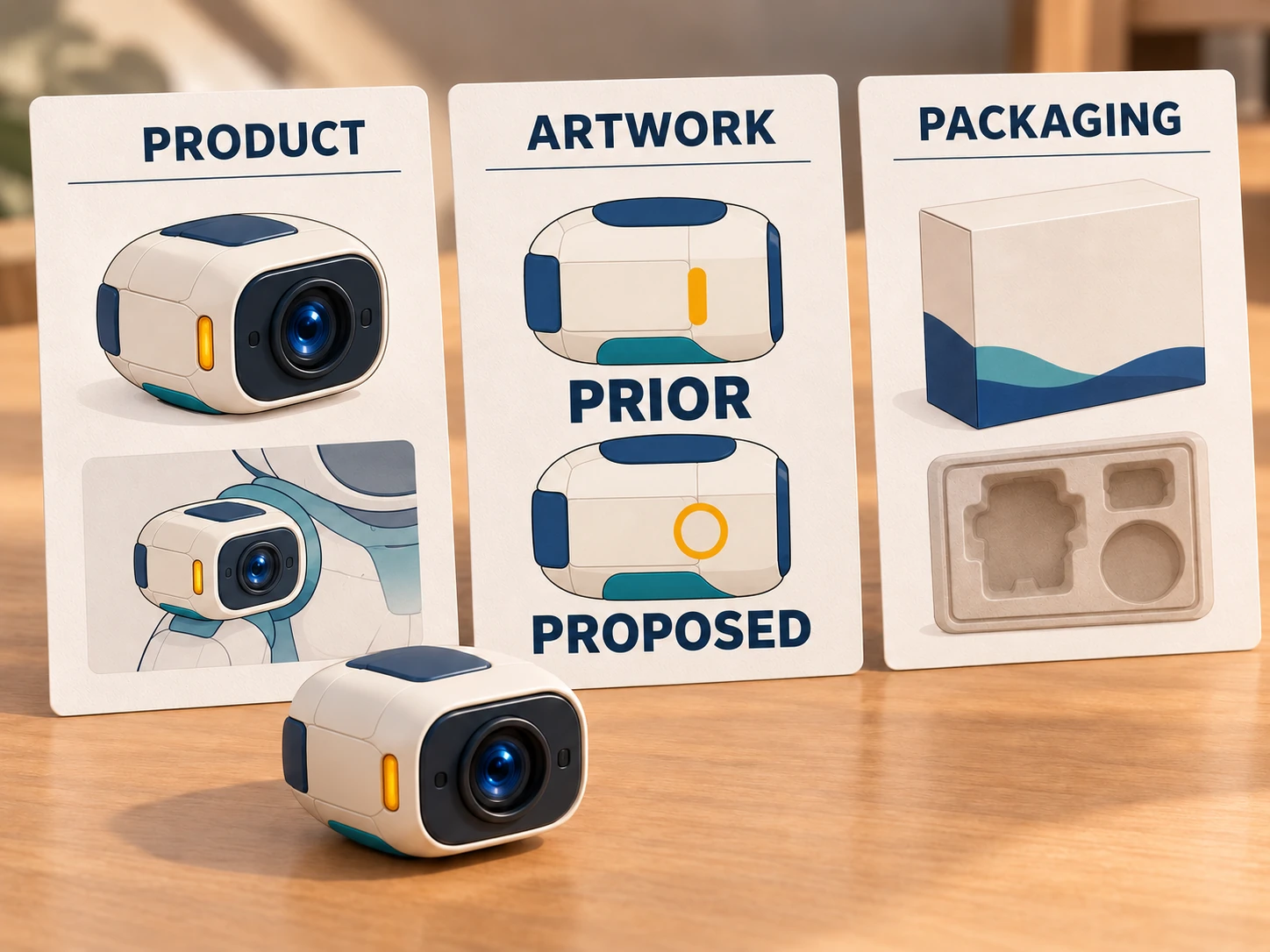
Confirm which order or version will receive the change, who will coordinate it and what remains open. Request the quotation against that scope rather than carrying earlier commercial terms forward without confirmation.
For scheduling, ask the supplier to identify outstanding inputs and approvals before planning the next stage. If packaging files or a product decision are still open, have those dependencies named. You can then discuss a project plan against the work actually defined.
Questions About Choosing a Manufacturing Partner
Does Every Process Need to Be In-House?
No. Focus on who performs the work, how requirements pass between them and who coordinates an issue. A supplier using partners should be able to explain those handoffs and identify which work is included. In-house work also needs a defined scope and agreed checks. Evaluate the arrangement against evidence relevant to your project.
Can You Compare Suppliers Before the Design Is Final?
Yes, as a preliminary discussion with assumptions and open points marked. Give each supplier the same current files, intended configuration and quantity estimates, identifying what is provisional. Compare the stated scope and assumptions, then ask for updated quotations when those inputs change. Do not treat different design assumptions as offers for an identical finished product.
Request a Production Review
Have a figure or model kit project in mind? Send FigCrafts the authorized files you can share and identify the current version. Include the intended size, quantity and variants, finish and packaging direction, target market and schedule.
If some details are still open, say which decisions need review. Describe any removable parts or assembly requirements so the discussion starts with the product you intend to deliver.